Google's new Gemini agent gets a workplace identity — and its own email address
October 11, 2026 · 5 items
Google's new Gemini agent gets a workplace identity — and its own email address
TechCrunch · October 8, 2026Buildable AI
At a Google Cloud event on Thursday, Google announced it is bringing Gemini "into the agentic age" with a unified agent that can answer questions and also get things done on the user's behalf, all from a single interface.
Per TechCrunch's summary, the agent can plan, execute tasks and work across business apps and systems, delegate work to subagents, use multiple AI models — and gets its own workplace identity, complete with an email address.
TechCrunch places it in a wave of tools moving past conversation into ownership of assigned tasks: generating code, scheduling meetings, booking appointments and travel, alongside consumer agents like Meta's Muse and messaging agents like Instinct.
Rollout is starting with businesses rather than consumers.
Why it matters for an independent practice: An agent with an email address and a workplace identity is exactly how a practice would hand off referral follow-up, inbox triage or recall outreach — and it is also a new account inside your Workspace. Before anyone connects it, answer the stewardship question first: what can that identity reach, is PHI in scope, and is it covered by a BAA? Treat it like onboarding a staff member, not installing a plugin.
A consumer AI assistant that books appointments shipped this week — and two reviewers disagreed on whether it saves time
The Rundown AI · October 9, 2026Buildable AI
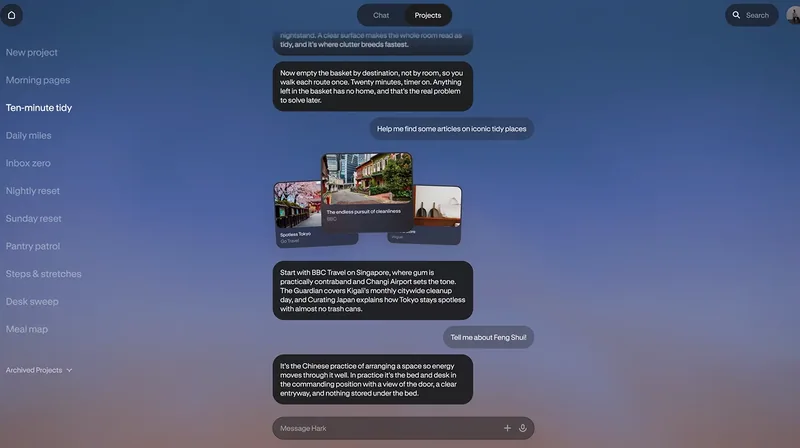
Hark, the startup from Figure AI founder Brett Adcock, launched Hark Pro on October 6 for web, iOS and Android; the company says it remembers preferences, flags tasks, and can research, shop and make bookings on a user's behalf.
Tasks run on Handoff, Hark's cloud computer, which Hark says can operate up to six browsers at once while showing its clicks in the chat. Pricing: free tier, $20/month for twice the usage, $100/month for ten times the usage.
The evidence is genuinely split. Fast Company's Nate Berg found Hark identified an oil-change need in his email and handled much of the booking — though he still had to supply identifying information and choose the appointment. Gizmodo's Raymond Wong judged Hark's food-ordering demo slower than ordering manually.
Hark also plans a family of devices for 2027 with AT&T connectivity; form, price, battery life and service terms are all still undisclosed.
Why it matters for an independent practice: This is what patients delegating a booking looks like from the other side of the counter. If an agent is driving a browser through your scheduling flow, hidden form logic, PDF intake packets and phone-only booking become dead ends — and your front desk needs a rule for what it does when the 'patient' on the form is software. Make the booking path machine-navigable, but keep identity verification human.
Anthropic is handing qualifying young companies a free year of Claude Team plus $1,000 in API credits
TechCrunch · October 6, 2026Buildable AI
Announced Tuesday as an expansion of the Claude for Startups program, launched as part of Anthropic's SF Tech Week event.
The offer: a free year of Claude Team (Anthropic's paid group plan) with up to five premium seats, $1,000 in API credits for building, access to Claude Marketplace to build plug-ins, and virtual office hours with Anthropic's Applied AI team.
Eligibility is broader than 'startup' implies: companies founded in the last five years, or that received funding in the last two. Applications go through the Claude for Startups program page.
Anthropic's stated reasoning: "the benefits of AI will reach most people through the companies that build on top of models, rather than through the models alone."
Why it matters for an independent practice: A clinic, med-spa or marketing shop that opened within the last five years can put a five-seat team plan and $1,000 of build credit to work this week at zero cost — enough to pilot intake summarization, content drafting or a scheduling workflow before anyone signs an annual contract. Check the founding date, apply, and treat the free year as the evaluation period you'd otherwise have to pay for.
Shift says bad benchmarks, not bad models, explain why 'AI virtual cells' have underperformed
Longevity.Technology · October 8, 2026Practice operations
Shift published research in Nature Biotechnology describing an improved calibration framework for deep learning-based genetic perturbation models — the models the field calls AI virtual cells, designed to predict transcriptomic responses to genetic interventions.
The framework sets up a benchmarking system that accounts for biological and technical signals in datasets, and the company claims it explains prior model underperformance caused by miscalibrated metrics.
Shift intends to apply it to large-scale in vitro and in silico screens for novel inhibition targets in rejuvenation and age-related disease, starting with fibrosis, and says the approach will guide discovery of dual-purpose targets after identifying SB-101 as its first.
The write-up is a wire item sourced to a Businesswire release and builds on Shift research published in November 2025 — the forward-looking claims are the company's, not independent findings.
Why it matters for an independent practice: For regen-med practices, this is a credibility line, not a treatment line: the discovery pipeline is getting better measuring sticks, and that is years upstream of anything a patient receives. It's a fair talking point about where the science is heading; it is not evidence for any therapy on your menu, and marketing it as such is precisely how a clinic's authority gets spent down.
Anthropic's updated usage policy now explicitly bans fake accounts and fabricated news outlets
TechCrunch · October 8, 2026Buildable AI
Anthropic updated its usage policy on Thursday, codifying new prohibitions on election interference, weapons software and surveillance.
Separate sections forbid broadly deceptive campaigns — specifically using Claude to run fake accounts or fabricated news outlets — with election rules collected under a heading titled "Do Not Undermine Democratic Processes."
The headline-grabbing change is a new ban on prolonged verbal abuse of the model. Anthropic says it "is meant to apply only in extreme cases, where users repeatedly act cruelly toward our models, with no discernible purpose," and "does not apply to common versions of user frustration, pushback, dark creative themes, or model testing and research."
It follows an August update in which Claude was trained to end conversations with "persistently harmful or abusive user interactions"; the new policy bars users from pursuing them.
Why it matters for an independent practice: The fake-accounts-and-fabricated-outlets clause is the one that touches marketing. The mechanics a vendor would use to manufacture reviews, astroturf a competitor or spin up a 'health news' site around a practice are now a terms-of-service violation at a major model provider — which makes it a fair question to put to any agency or reputation vendor in writing: what are you generating on our behalf, and under whose account?