63% of adults would wait 48 hours for a clinician-reviewed AI reply over an instant AI answer — but flip to speed for refills and scheduling
October 16, 2026 · 5 items
63% of adults would wait 48 hours for a clinician-reviewed AI reply over an instant AI answer — but flip to speed for refills and scheduling
Medical Economics · October 14, 2026Practice operations
In a survey study published Oct. 14 in JAMA Network Open, 63.1% of U.S. adults chose an AI answer reviewed and edited by a doctor or nurse within 48 hours over the same AI answer delivered within five minutes.
The preference reversed for logistical portal messages — appointment scheduling and prescription refills — where 57.4% wanted the faster AI response. For general messages (nonmedical questions, administrative requests) the split was nearly even at 50.6% for speed.
Researchers at Columbia University School of Nursing and Vanderbilt University Medical Center surveyed 1,185 adults through Qualtrics online panels, balanced on gender, education and generation, with 50% of participants targeted as members of racial or ethnic minority groups.
Worth noting for anyone citing it: the article states the fielding window was June 17 to July 26, 2024, so the attitudes are two years older than the publication date.
Why it matters for an independent practice: This is a portal-automation policy in one number: route scheduling and refill messages to AI for instant reply, but keep clinical-question drafts in a human-review queue and tell patients that's what you do. The 48-hour wait is not a service failure in patients' eyes — it is the trust signal, and an independent practice can market it as one.
Utah hires six outside evaluators to audit health-AI claims before sandbox tools deploy, after its refill pilot drew a board request to suspend
Healthcare IT News · October 12, 2026Practice operations
The Utah Department of Commerce's Office of AI Policy announced on Oct. 5 that it signed agreements with six third-party evaluators — the Coalition for Healthcare AI, Stanford Clinical Excellence Research Centers, Clarion AI Partners, Glacis Technologies, Vega Health and mpathic AI — to audit AI decision-reporting accuracy and validate developers' performance and safety claims.
The model came out of failure: the sandbox's January pilot automating prescription refills, led by Doctronic, drew patient-safety scrutiny, and in April the state's medical licensing board asked OAIP to suspend it because patients could keep refilling medications without necessary clinical reassessment.
Legal and policy analyst Cam Bronson framed the driving question as "Are we just going to take the companies' word for it, or by extension, are we just going to take the government's word for it that these things are working?" OAIP director Zach Boyd added that "technical innovation will never supersede patient safety."
Doctronic's agreement ends later this month with a 12-month extension under discussion carrying "increased reporting standards"; five new one-year agreements were announced Oct. 5 with University of Utah Health and Intermountain, Nolla Health, Expect Fitness and August AI.
Why it matters for an independent practice: A state has now written down what 'validated' means, and independent practices can borrow the posture without waiting for their own state: before you deploy a vendor's AI in a clinical workflow, ask who independently verified the performance claim and what they measured. 'The vendor says so' is the exact answer a regulator just rejected.
Patients texting their own EEG monitors cut simulated false seizure alarms by 80% in a 13-patient Penn pilot
Medical Economics · October 14, 2026Practice operations
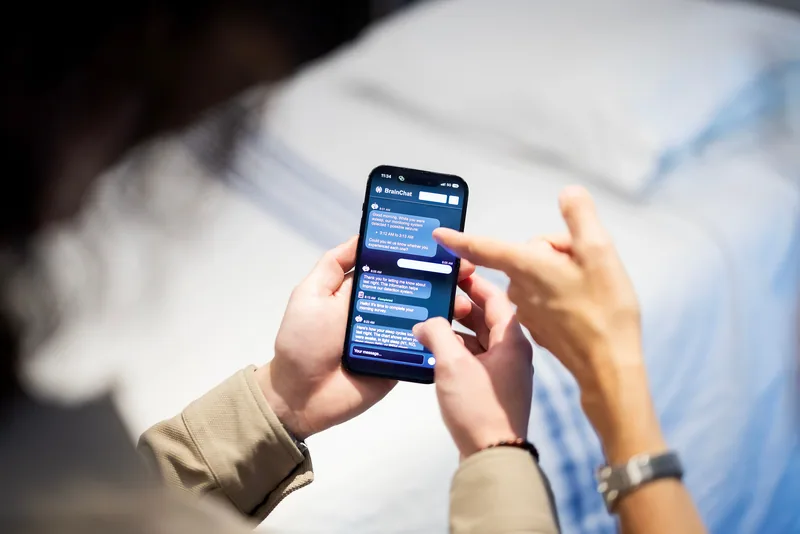
Thirteen adults in the epilepsy monitoring unit at the Hospital of the University of Pennsylvania used a smartphone app to ask an AI agent with live access to their EEG data whether they'd had a seizure, how they slept, and what their brain activity looked like — answered sometimes with charts.
When the app flagged a possible seizure, patients marked it real, a false alarm, or uncertain; researchers used those labels to retrain the seizure detector, and a post-hoc simulation found false alarms fell 80% across patients' hospital stays.
The study was published Tuesday in Nature Medicine by researchers at Penn's Perelman School of Medicine and its Center for Neuroengineering and Therapeutics.
Context from the NIH release cited in the piece: EEG devices record continuously, but the data generally reach expert reviewers only on a daily or multiday basis.
Why it matters for an independent practice: The transferable idea is not the EEG — it's that the patient was made the labeler, and their corrections became the training signal. Any practice running AI alerts, intake triage, or monitoring can build the same loop: give patients a one-tap way to say 'that wasn't right,' and the system improves while the relationship deepens instead of going cold.
An oncology podcast walks through using LLMs to turn 231 scanned documents per cancer patient into structured, verifiable data — and how to vet the vendor doing it
AI and Healthcare · October 13, 2026Practice operations
Oncologists Sanjay Juneja, MD and Doug Flora, MD host Mika Newton, CEO of xCures, on a new paper in AI in Precision Oncology about using large language models to convert hundreds of medical records per cancer patient into structured healthcare data.
Per the episode description, the chapters cover why a patient's records can run to 231 documents from dozens of institutions, the mismatched 'languages' of health data (OMOP, SNOMED, ICD, CPT) whose crosswalks are never one-to-one, and why learning a document's structure before extracting is where 95% of the work sits.
There is a buyer's-guide segment — dual human extraction, model drift, a 17-page vendor checklist, and whether it pays for itself — plus chapters on interoperability (TEFCA, Individual Access Services, CMS's Kill the Clipboard) and on measuring hallucinations rather than worrying about them.
Conflicts are stated up front in the description and on the clock (COI disclosure at 1:59): Newton founded the podcast and sits on the editorial board of the journal publishing the paper, which the description says went through independent peer review. This is a description, not a transcript — these are the topics covered, not findings I can verify.
Why it matters for an independent practice: This is the clearest available checklist for a practice buying any records-extraction or chart-abstraction AI: ask about dual human extraction, model drift monitoring, and which pages the system refuses rather than guesses on. Same questions apply to intake-document AI in a regen-med clinic drowning in faxed outside records.
Nate Herk's new build video moves agents out of single-player mode into a shared team workspace
Nate Herk | AI Automation · October 15, 2026Buildable AI
The premise stated in the description: "Most of us have been using AI in single-player mode, where your AI OS, skills, and connected accounts only help you" — the video is about humans and agents sharing one workspace instead.
Chapters run roughly 21 minutes and cover single-player vs. multiplayer AI (1:17), why he tried the tool Kylon (3:00), moving a team to AI-native (4:01), a worked 'Instagram Room' example (5:29), fresh workspace setup (9:28), and bringing your own Claude Code and Codex into it (12:55).
It closes with a 'how to get started with your team' section at 16:30 — the handoff-to-staff part that most agent walkthroughs skip.
Zero medical content, and the description tells you what he demonstrates, not what he concludes.
Why it matters for an independent practice: The shift that matters for a practice: the agent that drafts your recall emails or triages your inbox shouldn't live in one person's personal account. Put it in a shared workspace with its skills and connected accounts visible to the team, and you've turned a staffer's clever hack into a practice asset that survives their vacation — and into something you can actually audit for who reached what data.