A White House docket item filed Oct 14 would let licensed pharmacies compound and sell certain unapproved peptides — over FDA scientists' objection
October 20, 2026 · 4 items
A White House docket item filed Oct 14 would let licensed pharmacies compound and sell certain unapproved peptides — over FDA scientists' objection
KFF Health News · October 19, 2026Pharmacy
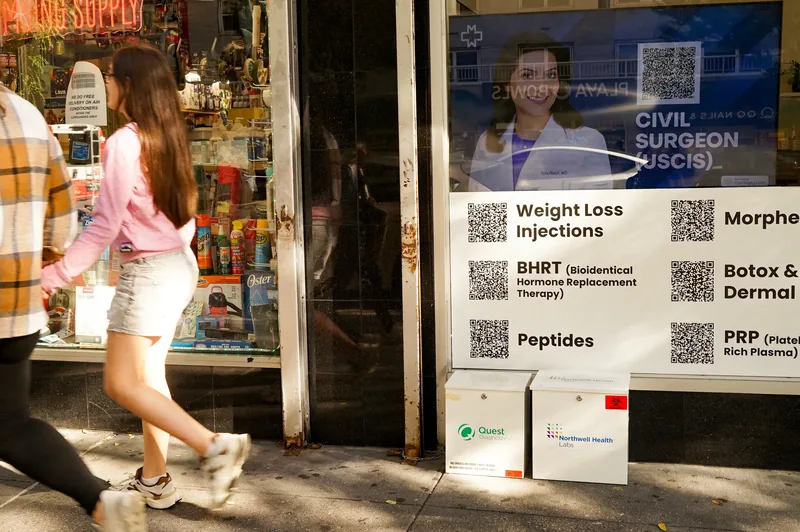
Amy Maxmen reports that on Oct. 14 a temporary "access policy" appeared on a White House docket proposing to allow licensed pharmacies to make and sell certain unapproved peptides to people.
FDA scientists had advised against the measure at the July 23–24, 2026 Pharmacy Compounding Advisory Committee meeting, warning the drugs hadn't been adequately vetted in clinical trials. The advisory panel disagreed and voted to loosen restrictions.
Per the story, many panel members are new appointees with financial stakes in the peptide industry; HHS spokesperson Emily Hilliard said in an email that every committee member satisfies the FDA's ethics requirements.
The piece notes experimental peptides are already sold at longevity, wellness and "performance medicine" clinics, and have been pushed by Health Secretary Robert F. Kennedy Jr. and other MAHA leaders despite lacking FDA approval for safety or effectiveness. It also ran in USA Today on Oct. 18.
Why it matters for an independent practice: This is the single most consequential item of the day for regen-med and compounding clients: if the access policy lands, patient demand for compounded peptides arrives at intake before the evidence does. Get the posture written down now — what you will and won't compound or administer, what the consent language says, and what your marketing claims. A practice that can say "here's why we do/don't offer this" in plain language keeps the trust; one that rides the hype inherits the liability.
Microsoft is now telling enterprises to treat AI agents as insider threats: 'frontier models can't be trusted'
TechCrunch · October 19, 2026Buildable AI
Julie Bort reports (Oct 19, 3:04 PM PDT) that Microsoft introduced new security features on Monday, with the framing that AI agents are like insider threats and that 'frontier models can't be trusted.'
Per TechCrunch's summary, Microsoft wants enterprises to closely watch the agents employees use with systems that are not controlled by AI labs like OpenAI and Anthropic.
Note on thinness: this is the posture and the product announcement — the piece is framing, not a study, and the detail available here is limited to that.
Why it matters for an independent practice: The vendor selling you the agents is telling you to monitor them like staff with access they haven't earned. For a practice, the practical translation is an access inventory: which agent or automation touches the EHR, the inbox, the scheduling system or the billing export, under whose credentials, and under what BAA. That inventory should exist before the next agent gets added, not after.
Attackers breached AI coding agent OpenCode, stole users' API keys and ran up charges on their AI accounts
TechCrunch · October 19, 2026Buildable AI
Aditya Mehta reports (Oct 19, 12:28 PM PDT) that OpenCode — an open source AI coding agent that has been gaining ground as an alternative to Claude Code and Cursor — said Saturday that attackers broke into part of its online platform.
Some users' API keys were stolen, and the charges were run up on those users' own AI accounts.
TechCrunch's summary adds an awkward wrinkle: the AI tools OpenCode turned to for help kept refusing to look at the malicious code.
Why it matters for an independent practice: The failure point wasn't the model — it was credentials sitting inside a tool. Every practice running n8n, Make, a scheduling bot or a content pipeline has provider API keys stored in exactly that way. This week's job: rotate keys, scope each one to the narrowest permission that still works, set hard spend caps so a theft shows up as a declined charge instead of a surprise invoice, and keep a list of which tool holds which key.
Boehringer Ingelheim extended its AI-genetics deal with Variant Bio into cardiovascular disease, with total value potentially topping $250M
Longevity.Technology · October 13, 2026Practice operations
Kyle Umipig reports the two companies announced an expanded, multi-year research collaboration and license agreement, extending existing kidney-disease work into cardiovascular disease.
Seattle-based Variant Bio's AI-powered Inference platform will be used to find and validate new drug targets; the company's premise is studying the DNA of people who stay healthy in situations where others don't.
Variant Bio is eligible for an additional upfront payment plus license and milestone payments, for a total deal value potentially exceeding $250 million. The release doesn't say how large the upfront portion is.
Why it matters for an independent practice: A dated, citable proof point for longevity and regen-med content: big pharma is paying nine figures for AI-driven target discovery in heart and kidney disease. Use it the honest way — as evidence the field is being funded seriously, while being explicit with patients that this is drug discovery, not a validated therapy they can receive today. That distinction is exactly what separates a credible longevity practice from a hype clinic.