Microsoft's diagnostic orchestrator hit 83.2% on NEJM case conferences vs 36.1% for generalist physicians, in a controlled text-only benchmark
October 25, 2026 · 5 items
Microsoft's diagnostic orchestrator hit 83.2% on NEJM case conferences vs 36.1% for generalist physicians, in a controlled text-only benchmark
Medical Economics · October 22, 2026Practice operations
The system, called the Diagnostic Orchestrator (DxO), simulates a panel of physicians; it reached the correct diagnosis in 83.2% of New England Journal of Medicine clinicopathological conference cases, versus 36.1% for generalist physicians who had access to search and reference tools.
On a second set of routine emergency department admissions, DxO was accurate 80.3% of the time against 46.8% for physicians, and often ordered less costly testing, per the study published in Science (10.1126/science.aeh7930).
Unlike earlier AI diagnosis studies that handed the model a complete case write-up in one prompt, both the AI and the physicians had to work through each case step by step — starting from a brief clinical presentation and deciding what history to take, what tests to order and when they had enough to call it.
Researchers caution the results come from a controlled, text-only benchmark rather than real-world practice.
Why it matters for an independent practice: This is the number patients will quote back to you by Thanksgiving. An independent practice should read the methodology line as the actual story — text-only, no exam, no continuity — and be ready to explain to patients, in plain language, what a benchmark score does and does not say about the care they are receiving in your room.
Every ambient-scribe note carries the physician's signature — and lawyers, auditors and patients are starting to read them closely
Medical Economics · October 22, 2026Practice operations
The scenario laid out in September by Sarah Matt, M.D., MBA — a practicing physician, host of Medical Economics' 'Vital Signs' and a member of its Editorial Advisory Board: a physician approves an AI-drafted note, and two years later that note surfaces as evidence in a malpractice case describing a detail that was never discussed.
Matt's framing of why this fails differently from human error: 'AI tools fail differently than people fail. The output looks correct, and that's the problem. Errors that look wrong get caught. Errors that look right get signed.'
The article's point about ownership is blunt — the software vendor may no longer exist, but the physician's signature is still on the chart.
Physicians have adopted ambient documentation faster than almost any technology before it; the legal, billing and contractual questions are only now catching up.
Why it matters for an independent practice: If a practice runs an AI scribe, the review step is not optional polish — it is the entire liability control. Build it as a system: a named review standard, a sampling audit of signed notes, and a documented answer to 'what happens to our notes if the vendor disappears.'
FDA grants 510(k) clearance to NeuroXT's NEXT-Cue, an AI tool that estimates five-year Alzheimer's progression risk in mild cognitive impairment
Longevity.Technology · October 23, 2026Regenerative medicine
NEXT-Cue is cleared as a Class II software-as-a-medical-device; NeuroXT Inc. received the 510(k) from the U.S. Food and Drug Administration.
It integrates brain MRI images, demographic information and cognitive assessment data to provide supplementary information helping clinicians assess patients with mild cognitive impairment for progression to Alzheimer's dementia within five years.
The company says it intends to advance U.S. commercialization and adoption at healthcare institutions, and is pursuing authorization from Korea's Ministry of Food and Drug Safety with commercialization there planned for early next year.
Longevity.Technology sourced the item to NeuroXT's PR Newswire release; the clearance notice itself is the substance — the piece reports no clinical performance figures.
Why it matters for an independent practice: For longevity and regen-med clinics, 'FDA-cleared, Class II, supplementary information for the clinician' is the exact language that separates a defensible cognitive-risk offering from a wellness claim. Watch which prognostic tools clear, and copy that framing in your own patient-facing materials.
476 ACOs still don't know what they earned or owe for 2025 — and actuarial AI is being pitched as the midyear read
Medical Economics · October 22, 2026Regenerative medicine
The 476 accountable care organizations in the Medicare Shared Savings Program in 2025 won't learn until November whether they earned shared savings or owe losses for that year.
CMS delayed 2025 financial reconciliation until after it finalizes the 2027 Medicare Physician Fee Schedule, so it can apply a proposed retroactive guardrail to the projected spending trend it uses to update ACO benchmarks.
CMS also reopened 2024 reconciliation for ACOs whose agreements began that year, replacing results first published in September 2025 with updated figures in July.
Medical Economics interviewed Najib Jai, M.D., MBA, chief operating officer of Arbital Health, on why settlements turn into disputes and how actuarial AI tracks contract performance while the year is still underway.
Why it matters for an independent practice: An independent group in a risk contract that only learns its position after the fact is negotiating blind. A running, in-year estimate is the leverage point — it turns a settlement you receive into a number you can challenge, and it is the kind of system worth owning rather than renting from the payer's math.
Anthropic's Claude Duet targets professionals and small businesses — briefings and dashboards, explicitly not errands
TechCrunch · October 22, 2026Buildable AI
Anthropic says the new agent is meant to cater to professionals and small businesses, helping them automate and manage tasks.
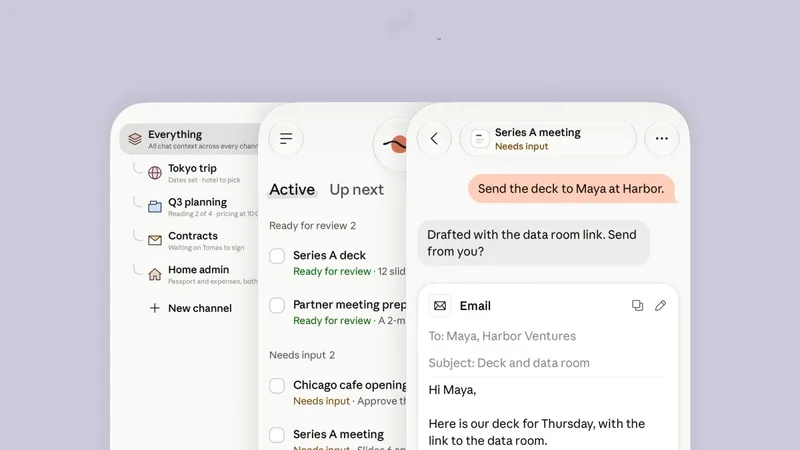
Duet can build a daily briefing for its users, create dashboards, or suggest actions based on the user's data.
Anthropic draws a line against personal agents like Instinct: Duet isn't good at handling errands or booking tickets, and it can't show you its browser use as it happens.
Availability is via waitlist for Pro and Max plan users; TechCrunch places it against Meta Muse, OpenAI Dots, Hark, Instinct, Grok Bot and Fo.
Why it matters for an independent practice: The practice-side application is the morning briefing: schedule gaps, new-patient leads, review alerts and campaign numbers pulled into one dashboard a practice manager reads at 8 a.m. Before connecting anything, settle the stewardship question first — what data the agent can reach, and whether any of it is PHI covered by a BAA.