FDA clears NeuroXT's NEXT-Cue, an MRI-plus-cognition AI that estimates five-year Alzheimer's progression risk in MCI patients
October 31, 2026 · 5 items
FDA clears NeuroXT's NEXT-Cue, an MRI-plus-cognition AI that estimates five-year Alzheimer's progression risk in MCI patients
Longevity.Technology · October 30, 2026Practice operations
Seoul-based NeuroXT announced NEXT-Cue received 510(k) clearance from the FDA as a Class II medical device; it is AI-based Software as a Medical Device (SaMD), meaning the product is the code itself.
The software is intended for patients with mild cognitive impairment being evaluated for progression to Alzheimer's dementia within five years, and takes brain MRI images, demographic information and cognitive assessment data as inputs.
It produces what the company calls supplementary information to support clinical assessment — not a diagnosis.
Longevity.Technology is explicit that this is clearance, which follows a different regulatory route from full approval.
Why it matters for an independent practice: Longevity and regen-med clinics field the 'is this the start of Alzheimer's?' question constantly. An FDA-cleared prognostic aid is a credibility anchor for that conversation — but the marketing language has to say 'FDA-cleared, supports clinical assessment,' never 'FDA-approved' or 'predicts Alzheimer's.' Getting that distinction right in a service page is the difference between authority and an enforcement letter.
DoorDash told investors it has received only 'several hundred' orders from AI agents — against 3 million deliveries a day
TechCrunch · October 30, 2026Buildable AI
On its third-quarter earnings call, DoorDash said it has seen only 'several hundred' orders placed by third-party agents such as Muse, Instinct and Fo.
For scale, TechCrunch notes the company said in its 2025 report that it completes an average of 3 million deliveries daily.
DoorDash said it is open to working with third-party agent makers — the door is open, the volume just isn't there yet.
Why it matters for an independent practice: This is the cleanest public number yet on agentic commerce, and it argues against reordering a practice's booking stack around AI agents this quarter. Spend the budget where patients actually are: a site whose content is machine-readable when an assistant summarizes you, and a human-fast path to an appointment. Revisit agent integrations when someone publishes a volume number that isn't rounding error.
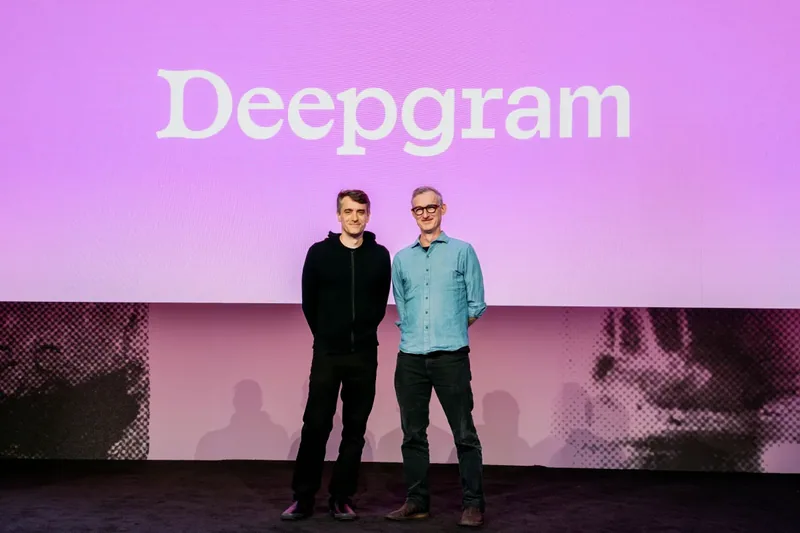
Deepgram is acquiring Daily, maker of the open-source Pipecat voice framework that a lot of clinic phone agents are built on
TechCrunch · October 29, 2026Buildable AI
Deepgram said on Thursday it is acquiring Daily, the maker and maintainer of Pipecat, described as one of the most popular open-source voice AI infrastructures.
Pipecat is a framework that manages voice and video streams along with other pieces of the pipeline — speech-to-text, large language models, and text-to-speech.
The deal amount was not disclosed, and the companies said they will keep Pipecat open source.
Why it matters for an independent practice: If a practice is running — or quoting — an AI front-desk or after-hours phone agent, there's a real chance Pipecat sits underneath the vendor's product. Ask your vendor directly which voice stack they build on and who owns it now; the open-source commitment is the thing that keeps an independent practice from being locked into one supplier's pricing later.
Granola added unlimited free dictation across every app on Mac, as notetaker and dictation tools collapse into one category
TechCrunch · October 29, 2026Buildable AI
Granola, known for its meeting notetaker, launched dictation: press the 'Fn' key and speak, and the tool cleans up and formats the speech and posts the final text.
It works across all apps — notes, prompts, email and message replies — and the company says dictation is available on all plans without any limits. iOS and Windows are coming 'soon.'
The category is converging from both directions: Wispr, a dictation tool, launched a meeting notetaker, and Fireflies, Speechify and Monologue have all become multifeature apps. Granola and Wispr are valued at $1.5 billion and $2 billion respectively.
Why it matters for an independent practice: Unlimited free dictation is real leverage for the non-clinical half of a practice's writing — referral letters, patient emails, first drafts of physician-authored blog posts that still carry the doctor's voice. The stewardship question comes before the rollout, not after: these are general consumer tools, so decide in writing which machines may use them and confirm nothing with PHI is being spoken into a vendor you have no BAA with.
Definitive Healthcare argues healthcare marketers are still optimizing for a search behavior patients have already left behind
Definitive Healthcare · October 29, 2026Patient acquisition
Alex Card frames the shift: for more than 20 years users followed a static process — type keywords like 'best Cleveland cardiologists' into a search engine, then click through the top results until they found what they wanted.
Today users can ask increasingly complex questions of Google, Bing and other search engines, and the piece argues content and SEO strategies have to adapt to that behavior heading into 2027.
Disclosure on thinness: this is a strategy explainer, not new survey data — there are no proprietary numbers in it, so treat it as a framing piece rather than evidence.
Why it matters for an independent practice: The practical MMR move is to audit one service line's pages against the questions patients actually type now ('is PRP worth it for knee arthritis at 58') rather than the two-word head terms the old dashboard still reports on. It's a cheap test you can run this week on a single page before committing a quarter's content budget.