MSKCC's DeepHeme classifies bone-marrow cells — and the episode walks through what validating it for clinical use actually required
November 2, 2026 · 4 items
MSKCC's DeepHeme classifies bone-marrow cells — and the episode walks through what validating it for clinical use actually required
AI and Healthcare · October 27, 2026Practice operations
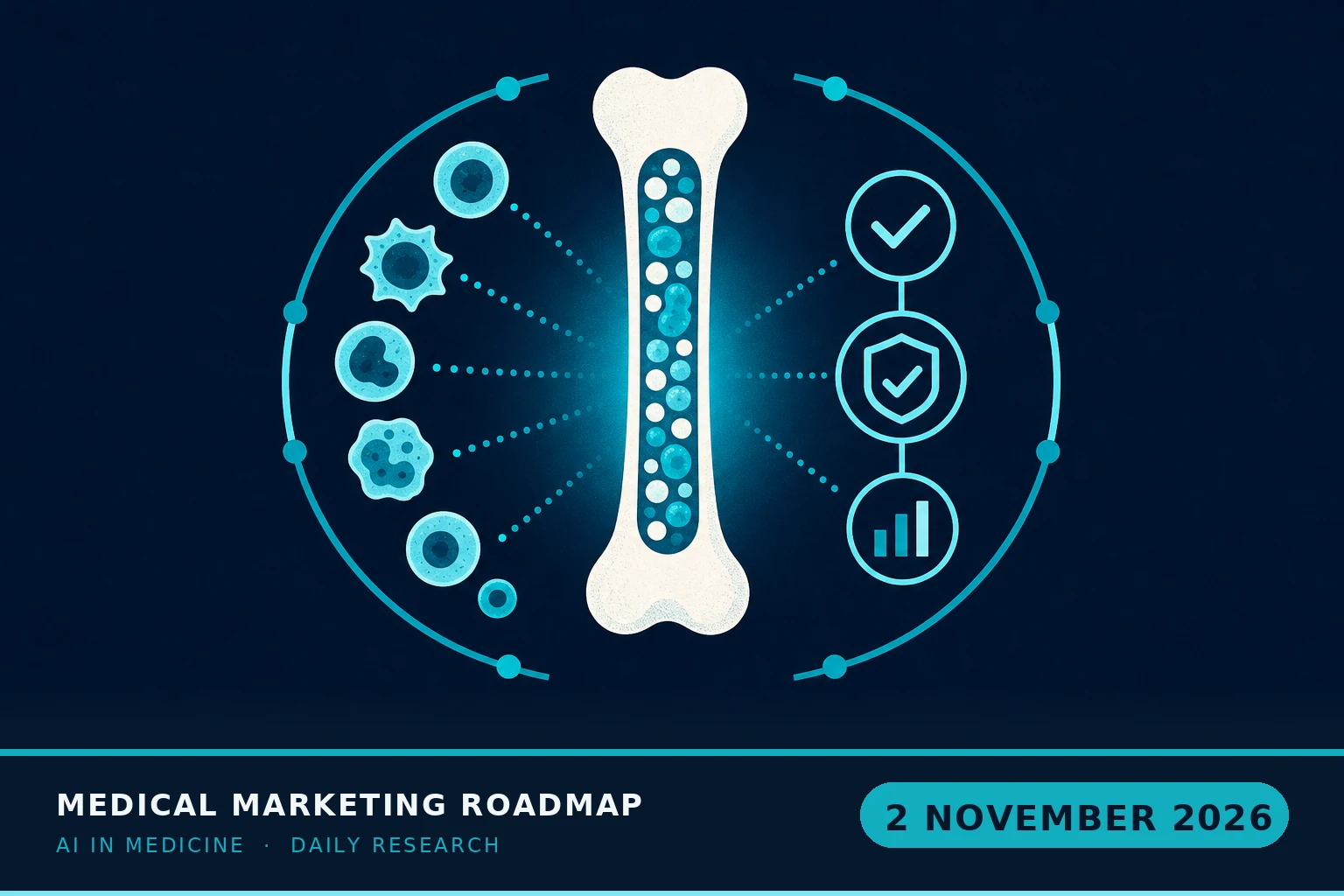
Episode 120 of the AI and Healthcare podcast, hosted by oncologists Sanjay Juneja, MD and Doug Flora, MD, with guest Gregory Goldgof, MD, PhD, MS — Director, Artificial Intelligence, Hematopathology Service at Memorial Sloan Kettering, a computer scientist and pathologist board-certified in clinical pathology and clinical informatics.
The stated subject is DeepHeme, the AI system his lab built to classify the cells in a bone marrow aspirate — the test at the center of diagnosing leukemia and other blood cancers — and 'what it took to get it validated and into clinical use.'
The chapter list tells you where the hour goes: 'Why AI models fail at other hospitals' (11:33), 'Bone marrow: no gold standard' (17:13), 'DeepHeme vs. hematopathologists' (18:41), 'Human review of every AI result' (22:59), 'Validating AI like a lab test' (24:27), and 'AI model scores are not probabilities' (29:05).
This is the creator's description, not a transcript — it tells you what the episode covers, not what it concludes. No performance figures are claimed in the description itself.
Why it matters for an independent practice: The framing to steal for client content is 'validating AI like a lab test' — a physician explaining that an AI result gets the same verification discipline as any other assay, with human review of every output, is the single most credibility-building thing a practice can say about its AI use. Use it as the spine of an authority piece rather than a vendor-spec page.
Digbi Health launches ASRA, an 'agentic care operating system' where AI agents run operations and clinicians keep decision authority
Longevity.Technology · October 30, 2026Regenerative medicine
ASRA unifies treatment for obesity, diabetes, hypertension, GI disorders and women's hormonal health, combining precision nutrition, lifestyle intervention and clinically appropriate pharmacotherapy — with secure AI agents performing operational tasks while clinicians retain clinical decision authority.
Built over three years on billions of linked data points: gut microbiome, genetics, lab results, medical and pharmacy claims, real-world GLP-1 effectiveness, nourishment-scored meals, continuous glucose monitoring and connected devices.
The company says it powers programs for more than 300 employers and health plans, reaches over 30 million eligible individuals across all 50 states with more than 700 clinicians and coaches, and reports a third consecutive year of revenue growth above 100% while profitable and cash-flow positive.
Its 'GLP Compass' architecture is pitched at letting employers and health plans consolidate fragmented point solutions and flex GLP-1 and HRT access and funding.
Why it matters for an independent practice: This is the disintermediation shape aimed squarely at regen-med and longevity clinics: an employer-contracted platform that owns metabolic, GLP-1 and hormone care for 30M covered lives before the patient ever searches for a local practice. The counter is the thing a platform can't claim — a named physician, in-person, with continuity — and that argument has to be live on the website and in the intake script now, not after a payer contract disappears.
Reddit is moving to a logged-in experience as search traffic dries up in the shift to AI-powered search
TechCrunch · October 29, 2026Patient acquisition
Reddit has long pulled millions of users from Google, with many people appending the word 'Reddit' to queries to get better answers — TechCrunch notes that behavior directly.
With search traffic drying up amid the shift to AI-powered search, Reddit announced it is rethinking its open-web roots; TechCrunch's own summary frames the move as protecting its audience and its business.
The piece is reported by Sarah Perez and timestamped 1:08 PM PDT, October 29, 2026.
Why it matters for an independent practice: A large share of the condition-and-clinic research patients do happens in Reddit threads that currently surface in Google and get cited by AI answer engines. If that corpus moves behind a login, both the visibility and the listening value drop — which raises the return on owned assets a practice fully controls: physician-authored condition pages, FAQs, and review profiles. Check now whether any client is relying on Reddit threads for referral traffic or reputation monitoring.
Zest put a booking agent inside SMS — no app, no portal, the conversation is the interface
TechCrunch · October 30, 2026Buildable AI
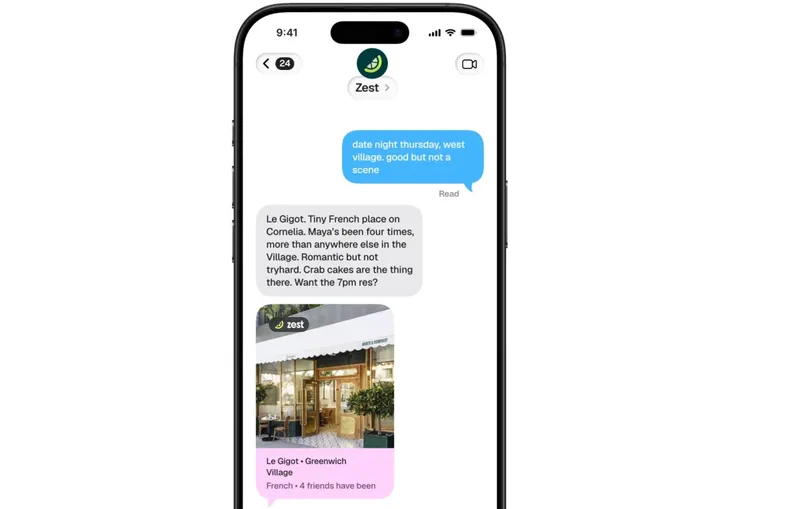
Zest, the restaurant discovery app that launched earlier this year, introduced a personal AI 'restaurant concierge' that lives in your text messages — announced Thursday, with a separate launch page at textzest.com.
TechCrunch places it alongside other text-message-resident AI agents like Instinct and Poke, and frames the move as a startup 'already thinking about a future where mobile apps are no longer the primary interface.'
Per TechCrunch's own summary of the product, the concierge can combine several people's tastes, put options to a vote, and make the reservation itself.
Zero medical content — the transferable part is the delivery channel, not the vertical.
Why it matters for an independent practice: Every practice already has the channel: patients text. The buildable version is an SMS agent that answers 'do you treat X,' offers two real slots and books one — no portal login, no app download, which is exactly where most intake friction dies. Two stewardship questions to answer before anyone ships it: the SMS vendor and the model provider both need a BAA, and the agent must be scoped to scheduling only, never to clinical answers.