Apple is recruiting up to 200,000 iPhone users for a 12-month study of health answers grounded in NEJM, JAMA and Nature
November 16, 2026 · 3 items
Apple is recruiting up to 200,000 iPhone users for a 12-month study of health answers grounded in NEJM, JAMA and Nature
TechCrunch · November 15, 2026Practice operations
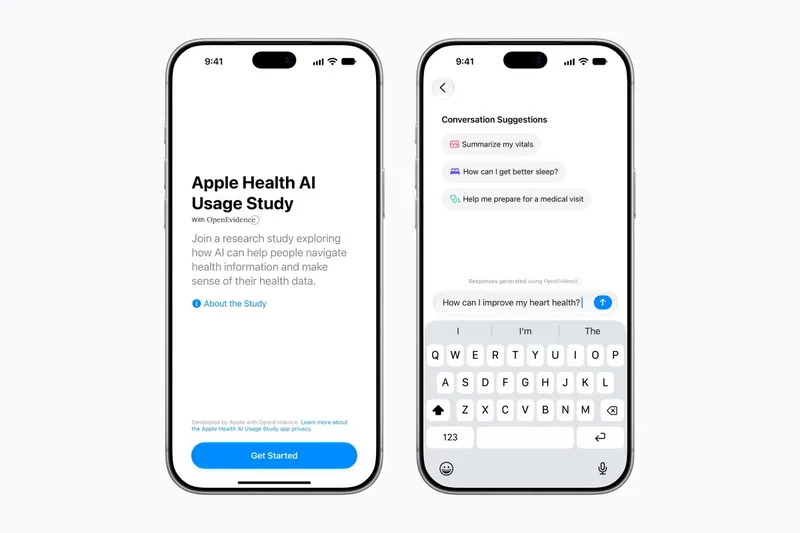
Apple is partnering with healthcare-focused AI company OpenEvidence on a new study app that lets users ask health questions the way they would ask ChatGPT or Claude, with answers grounded in clinical sources including The New England Journal of Medicine, the Journal of the American Medical Association, and Nature.
Eligibility is narrow and specific: U.S. users over 21, on iPhone 15 or later, running iOS 26 or later, with Apple Intelligence enabled. Apple is aiming for up to 200,000 participants over more than 12 months.
TechCrunch frames the positioning deliberately: OpenAI and Anthropic have bet on chatbots with specialized health features, while Apple says it wants to study how clinically grounded answers help people — a research posture, not a product launch.
Reported by Ivan Mehta, 5:30 PM PST, November 15, 2026.
Why it matters for an independent practice: If this runs at scale, a meaningful slice of your patient panel will walk in having already received a citation-backed answer from Apple before they ever reached your front desk. The practical move for an independent practice is to assume the patient arrives pre-briefed: your intake and your website content should be written to confirm, correct and contextualize a journal-grounded answer rather than to deliver the basic answer first. That is a credibility opportunity, not a threat — but only for practices whose own published content is specific enough to survive the comparison.
Claude's new Whiteboards turns a spoken plan into a shared team board — and is explicitly unavailable to HIPAA-configured organizations
The Rundown University · November 15, 2026Buildable AI
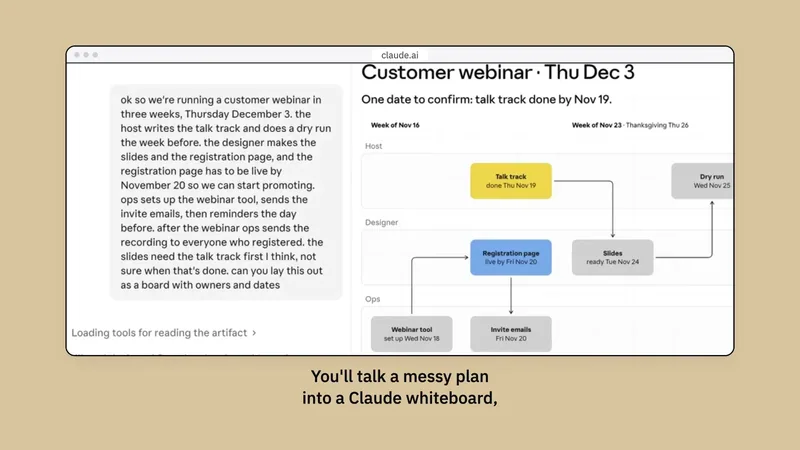
The six-step guide walks through opening a Whiteboard from Claude's Artifacts tab, dictating a messy plan out loud through the Reply box microphone, and letting Claude build the first version of the board — about five minutes in their test — then fixing it by hand and by asking.
Availability is restricted: as of November 2026 Whiteboards is in beta on paid plans only (Pro, Max, Ultra, Team and Enterprise), not Free, and on Enterprise it stays off until an owner enables it under Organization settings > Artifacts.
The stewardship line is stated outright in the troubleshooting notes: organizations with HIPAA-ready configurations can't use it. It also isn't in Claude for Teachers, and Artifacts require code execution / file creation capabilities to be switched on.
A nice detail for anyone who builds plans this way: Claude marks its own guesses as yellow 'Settle first' cards — on the guide's example board, both Slides and Dry run hung off a single date Claude had to invent — and the guide says settle those with their owners before inviting anyone to the board.
Why it matters for an independent practice: This is a genuinely useful ops tool for a practice — talk through a new-patient intake redesign, a 503A compliance rollout, or a Q1 campaign and get a shared board your team can edit. But the HIPAA-configuration exclusion draws the line for you: if your Claude org is the HIPAA-ready one, this feature is simply off, which means Whiteboards belongs on the marketing-and-operations side of the house and never near patient data. Check which configuration your account is on before you plan a workflow around it.
Oura paid $625m for Counsel Health to put clinicians behind its ring data
Longevity.Technology · November 11, 2026Regenerative medicine
Oura's $625m acquisition of Counsel Health is framed by the outlet as 'a bigger ambition for Oura: turning the information its ring collects into healthcare.'
The piece sets up the gap plainly: a smart ring can tell you that you slept badly and can pick up changes in heart rate, temperature or activity that suggest something is different from your usual pattern — but the obvious follow-on question is what you're supposed to do with that information. Buying a clinical service is Oura's answer.
Reported by Kyle Umipig, filed under Investment, November 11, 2026.
:warning: Disclosure: the body of this article sits behind a free-registration wall. The thesis, the price, the target and the date are readable above the wall; deal specifics beyond that are not, and nothing above is asserted here that wasn't in the visible text.
Why it matters for an independent practice: Interpreting continuous biomarker data for a patient is exactly the conversation a longevity or regen-med clinic owns — it is the reason the first consult has value. A $625m bet that the device maker can host that conversation itself is a direct disintermediation signal for independent clinics. The defensible answer isn't to out-spend it: it's to be the practice that already asks new patients what their wearable has been telling them, and whose intake makes that data actionable in a way a remote text-based service can't.