"Responsible AI" just became a certification you can actually earn — and the first one in the country has been awarded_ _(Healthcare Finance News / Healthcare IT News — Aug 5 · Lens A)
August 11, 2026 · 4 items
"Responsible AI" just became a certification you can actually earn — and the first one in the country has been awarded_ _(Healthcare Finance News / Healthcare IT News — Aug 5 · Lens A)
Healthcare IT News / Healthcare Finance News (Trusted) · August 5, 2026Practice operations
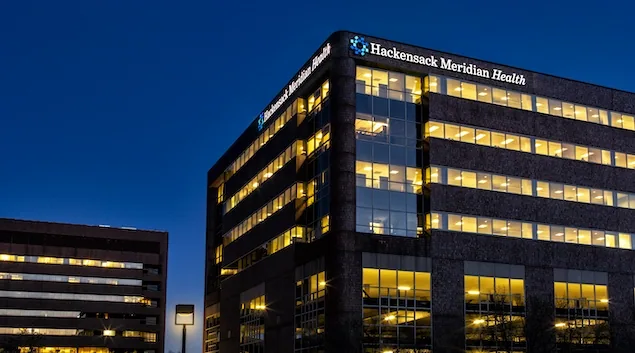
Hackensack Meridian Health (New Jersey) became the first healthcare network in the nation to earn The Joint Commission's Responsible Use of AI in Healthcare (RUAIH) Certification — a voluntary program the Commission only launched in June 2026, after releasing initial guidance in 2025.
The Joint Commission evaluated HMH across defined domains: governance, safeguards for patient safety and data, processes to reduce risk and bias in AI tools, monitoring, patient education and staff training. HMH's qualifying asset was a formal AI governance structure it had already stood up in 2022 — years before the certification existed.
Scale matters here: The Joint Commission accredits more than 20,000 US healthcare programs and organizations, and built RUAIH after convening 20+ coalitions and working groups. That's the accreditation body most of American healthcare already answers to putting a stake in the ground on AI.
CEO Robert C. Garrett framed the payoff in patient terms: earlier disease detection, personalized treatment, less administrative work driving burnout — so clinicians "spend more time caring for patients."
Why it matters for an independent practice: this is the first hard, third-party-verifiable credential for AI trustworthiness in medicine — and credentials travel. Two moves. (1) Watch the domain list, not the certificate — governance, bias-reduction, monitoring, patient education, staff training is now the de-facto checklist any practice will eventually be asked about; you can self-audit against it today for free. (2) For MMR, this is a marketing asset in the making: the first regen/specialty practices that can credibly say "here's how we govern our AI" will differentiate on trust while competitors are still quietly pasting ChatGPT output. Note the lead time — HMH won because it started in 2022. Source: Healthcare IT News / Healthcare Finance News (Trusted) — Susan Morse, Aug 5, 2026. healthcarefinancenews.com/news/hackensack-meridian-health-earns-joint-commissions-ai-certification
71% of orgs that PROVED AI works still aren't scaling it — and the #1 blocker just changed from "we don't trust it" to "it won't fit our workflow"_ _(Healthcare IT News — Aug 7 · Lens A/E)
Healthcare IT News (Trusted) · August 7, 2026Practice operations
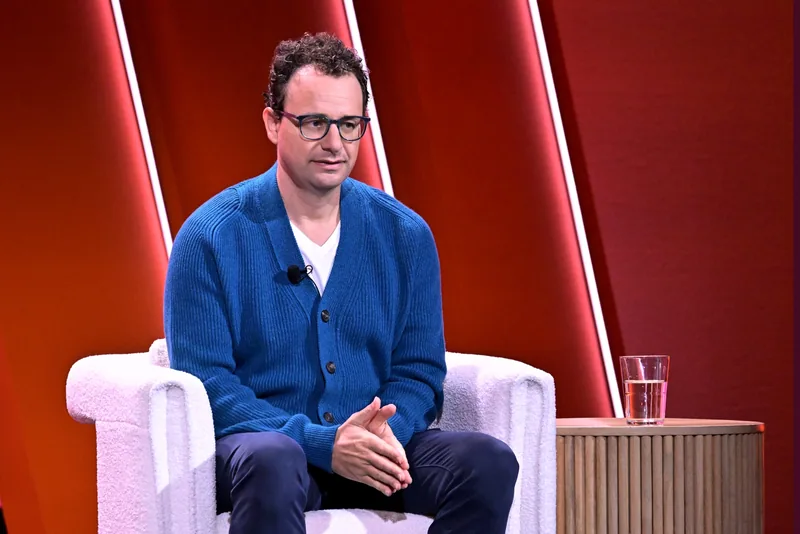
New Carta Healthcare survey, via CEO Brent Dover: 71% of healthcare organizations reporting measurable value from AI still are not expanding those initiatives at pace. His read — "The pilots proved that it does. What stalls is everything that comes after the proof." Pilots succeed because they're narrow: one champion, one workflow, concentrated attention. Spread it out and every favorable condition disappears.
The headline reversal: EHR integration difficulty is now the leading adoption barrier at 44% — well ahead of clinician trust (26%) and regulatory concerns (26%). Dover: "A tool can be accurate in a demo and still fail the moment a clinician has to leave their workflow to use it. Anything that sits outside it adds steps, and added steps are where adoption quietly dies."
Ownership is the other failure mode: clinical leaders are now the most common owners of AI strategy (past IT and past the exec suite) — but 26% of organizations have no clearly defined AI owner at all. "One in four organizations is trying to adopt AI with no one accountable for the strategy. A pilot without an owner has nowhere to go."
Strongest consensus in the whole survey: 92% said deep clinical domain expertise is critical when evaluating an AI vendor. Dover's buying rule — "Ask vendors to prove integration in your environment, with your data and your workflows, before you commit," and favor vendors who show peer outcomes and will share performance risk rather than run a demo.
Why it matters for an independent practice: this is a purchase-order-level checklist, not a think piece. Before you sign for a scribe, intake bot, or marketing automation: (1) make integration a contract condition — a paid pilot in your environment, on your data, before full commitment; (2) name one accountable owner (in a small practice, a person — not "the team"); (3) ask for named peer outcomes and whether they'll tie fees to results. The 44%-over-26% flip is the useful headline: the market's problem is no longer belief, it's plumbing — and plumbing is something you can negotiate for. Source: Healthcare IT News (Trusted) — Bill Siwicki, Aug 7, 2026. healthcareitnews.com/news/hospitals-must-prove-they-can-make-ai-operational-scale
CMS just proposed same-day Medicare coverage for breakthrough devices — and named AI diagnostic software as a qualifying category_ _(Healthcare Finance News / Healthcare IT News — Aug 10 · Lens A/D)
Healthcare IT News / Healthcare Finance News (Trusted) · August 10, 2026Practice operations
CMS formally issued a proposed procedural notice for the RAPID pathway (Regulatory Alignment for Predictable and Immediate Device coverage), following through on a concept it floated jointly with FDA back in April. RAPID aligns CMS and FDA evidence requirements in advance so the two reviews stop running in sequence.
The mechanics are the story: a proposed National Coverage Determination could be issued the same day as FDA market authorization, with Medicare coverage beginning as soon as 60 days after authorization. Today that gap routinely runs years — a device can be legally marketable and commercially dead because nobody will pay for it.
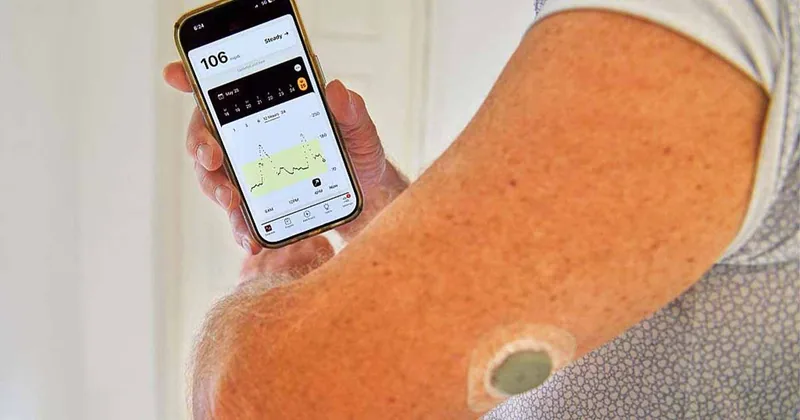
Who qualifies: FDA-designated Breakthrough Devices addressing unmet needs for Medicare beneficiaries — all Class III devices plus certain Class II devices in FDA's Total Product Life Cycle Advisory Program. CMS's own examples of breakthrough devices include "AI-powered diagnostic software" alongside continuous glucose monitors, pulsed field ablation and robotic surgical platforms. In vitro diagnostics are excluded (they stay with the MACs).
Scale and clock: 1,284 Breakthrough Device designations had been granted by CDRH and CBER as of March 31. The announcement opens a 60-day public comment period — meaning the window to file comment is open right now.
Why it matters for an independent practice: reimbursement, not clearance, is what decides whether a technology reaches your patients — and CMS just proposed collapsing the worst part of that lag for exactly the category (AI diagnostics, advanced devices) that regen and specialty practices care about. Three practical reads: (1) expect faster arrival and faster vendor pitches for AI diagnostic tools — the Carta rule above applies, don't let speed-to-market substitute for proof-in-your-environment; (2) if you or a client has a device/diagnostic in the pipeline, the 60-day comment window is a real, dated action item; (3) faster Medicare coverage of AI diagnostics gradually resets what patients consider standard — a cash-pay practice should know what's about to become covered elsewhere. Source: Healthcare IT News / Healthcare Finance News (Trusted) — Susan Morse, Aug 10, 2026; CMS fact sheet primary. healthcarefinancenews.com/news/cms-issues-formal-notice-faster-approval-breakthrough-medical-devices
Every word Claude writes now carries an invisible watermark — worldwide, on by default, and you can't turn it off_ _(Tech Times / Anthropic Help Center — Aug 11 · general-AI, flagged · the "0% medical, extrapolate" item)
Tech Times (general · August 2, 2026
Anthropic disclosed Monday that every Claude model launched on or after Aug 2, 2026 embeds an invisible statistical watermark directly into generated text — woven into token selection at generation time. It covers the API, claude.ai, Claude Code, Cowork, Claude Tag, and Claude via AWS, Google Cloud and Microsoft Foundry. The mark "will travel with the text when it's copied and pasted elsewhere." Files (.png, .jpg, .svg) get signed C2PA provenance metadata instead.
The trigger is EU AI Act Article 50, enforceable Aug 2, with penalties up to €15M (~$17.3M) or 3% of worldwide turnover. But Anthropic went further than the law requires — the EU can't compel marking of an API call from Singapore, and Anthropic applied it globally anyway. Legacy pre-August models get watermarking before Dec 2, 2026.
Here's the part that actually matters for a practice — the mark proves Claude PROCESSED the text, not that Claude AUTHORED it. Anthropic states it plainly: "Claude may not be the original author." Ask Claude to proofread, translate or reformat your own writing and the output comes back marked. Meanwhile paraphrasing destroys the signal entirely, and texts under ~100 tokens carry no reliable signal at all.
And the detector hasn't shipped yet. Nobody outside Anthropic can currently check any text, or knows the false-positive rate. Prior research on non-watermark AI detection found over 50% of essays by non-native English speakers falsely flagged (Stanford, Patterns); UCLA and UC San Diego both switched their AI detectors off in 2024–25 over that risk. Developers get no opt-out and — per Anthropic — still carry their own separate Article 50 duty to disclose to end users that a product is AI-powered.
Why it matters for an independent practice: nothing medical here, and that's the point — this lands squarely on P2, where unattributed AI content is named as a trust risk. Concretely: every blog post, patient-education page, review reply and physician-bylined article your team drafts with Claude is now invisibly marked, and a detector is coming. Three moves. (1) Assume detectability and write accordingly — physician-reviewed, physician-approved, named byline. That's the standing MMR advice, now with teeth. (2) Don't panic and don't over-read it either — a mark on a doctor's article that Claude merely edited proves nothing about authorship, and you should be ready to say so calmly if a patient or platform raises it. (3) If MMR builds anything client-facing on Claude (chat, intake, follow-up), the disclosure obligation is yours, not Anthropic's — say it's AI-powered, in plain language, on the page. Source: Tech Times (general-AI) — flagged, not a tracked-Trusted source; Anthropic Help Center is the primary. Aug 11, 2026. techtimes.com/articles/323873/20260811/claude-now-watermarks-text-everywhere