Oracle just turned on a patient-facing AI chatbot for every one of its US EHR customers — patients can now interrogate their own chart_ _(Healthcare IT News — Aug 12 · Lens A/D)
August 12, 2026 · 4 items
Oracle just turned on a patient-facing AI chatbot for every one of its US EHR customers — patients can now interrogate their own chart_ _(Healthcare IT News — Aug 12 · Lens A/D)
Healthcare IT News (Trusted) · August 12, 2026Practice operations
Oracle Health announced Wednesday that its AI-powered patient portal is generally available to all Oracle EHR customers in the US. Not a pilot, not a waitlist — on, everywhere, now. It aggregates data from clinical documentation and gives patients self-service tools to ask medical questions about their diagnoses, tests and recommended treatments.
What patients can actually do: get plain-language summaries of recent visits, chronic conditions and medications; ask about lab trends and vitals over time ("how are my cholesterol trends," "how am I managing my diabetes"); get notified about upcoming visits and prompted to complete labs or book follow-up screenings. It also contextualizes scheduling — recommending clinicians based on prior visits and care team, then offering time slots.
The guardrails are the interesting part. When a patient asks for medical advice, the AI is blocked from giving diagnoses, advice or treatment recommendations — it redirects them to their provider, or to 911/the nearest ER. All health data stays in the EHR; Oracle says no personal medical data is stored outside its system or in third-party models.
And the provenance design is worth stealing: AI-generated text is highlighted with a visual bar and cites its sources. Seema Verma (EVP/GM, Oracle Health and Life Sciences): "Remember in math class, where just giving the answer wasn't good enough; you also had to show your work? That's what Oracle AI does." Oracle's stated org-side payoff is lower call volume and fewer general inquiries.
Why it matters for an independent practice: your patients are about to arrive at appointments having already had an AI explain their labs to them — and increasingly that AI will be their health system's, not ChatGPT. Three reads. (1) The bar for your own patient communication just moved — if a hospital portal gives plain-language lab explanations for free, a cash-pay regen practice sending a bare PDF result looks dated. (2) Copy the "show your work" pattern in everything MMR builds — visible AI attribution with cited sources is the cheapest trust feature available, and it lines up exactly with yesterday's watermark item. (3) Note what Oracle refuses to let the AI do (diagnose, advise, recommend treatment) — that's a ready-made scope boundary for any patient-facing bot you or a client deploys. Source: Healthcare IT News (Trusted) — Andrea Fox, Aug 12, 2026. healthcareitnews.com/news/ai-tools-now-widely-available-oracle-healths-patient-portal
ChatGPT ran ads on 28.69% of healthcare commercial prompts — more than 10× Google AI Mode — and OpenAI quietly stopped blocking ads near medical advice back in April_ _(Search Engine Journal — Aug 12 · Lens C/MMR · Candidate source)
Search Engine Journal (Candidate) · August 12, 2026Patient acquisition
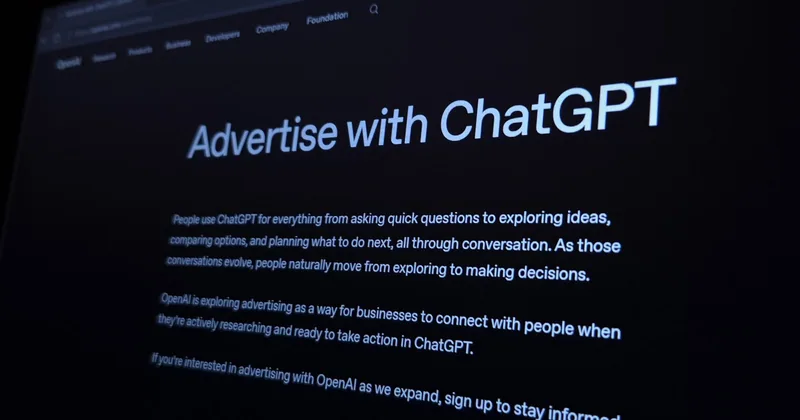
A new SE Ranking report found ChatGPT showed ads on 28.69% of commercial prompts in its healthcare category — versus 2.64% the same company recorded in Google's AI Mode. Overall, of 50,006 commercial prompts across 20 niches (US, collected July 23), 12,974 returned an ad — a 25.94% rate.
The policy change behind it: in April OpenAI stopped categorically blocking ads near medical, legal and financial advice. Its changelog calls this a "more precise approach." Its ad policies page — last updated Aug 10 — now separates where ads can appear from who can buy them. Health advertisers are approved one at a time through manual review, and the eligible list includes health insurance, dental services, supplements, vision products, medical testing, and hospitals and urgent care. Legal-advice ads are still banned; political ads are banned outright.
Two things are still walled off: chats OpenAI deems unsuitable, and "sensitive user contexts" — which explicitly covers conversations about mental and personal health. So the 28.69% figure counts prompts SE Ranking categorized as healthcare commercial queries, not personal health conversations. The report can't show whether ads appeared inside the protected contexts.
Two honest caveats SEJ flags. Ad eligibility has changed four times since March — OpenAI updated its February announcement three times, most recently Aug 11 to add the UK, Mexico, Brazil, Japan and South Korea to the pilot — so any campaign plan you build goes stale fast. And relevance is uneven: 14.35% of ad impressions sat no closer to their own prompt than to a randomly shuffled one. (SE Ranking sells ChatGPT ad tracking, so read the framing accordingly.)
Why it matters for an independent practice: this is the first hard number on the channel MMR has been circling for months — paid placement inside the AI answer is real for medical categories right now, and it's roughly ten times denser in ChatGPT than in Google's AI Mode. Three moves. (1) Check eligibility this month, not next quarter — health buyers go through manual approval one at a time, so the queue is the constraint, and the rules have moved four times since March. (2) The categories named (medical testing, supplements, urgent care, dental, vision) map closely onto cash-pay adjacent services — which is exactly the regen/aesthetic client base. (3) Weigh it against P2: a supplement ad landing next to a patient's health question is a trust surface, not just an impression. Being early here is an advantage; being sloppy here is a reputational bill. Source: Search Engine Journal (Candidate) — Matt G. Southern, Aug 12, 2026; SE Ranking report + OpenAI ad policies page primary. searchenginejournal.com/openai-allows-some-health-finance-ads-in-chatgpt
Good news for small sites: ChatGPT's own index served hundreds of unlicensed publishers exactly the way it served its paying partners — the "you need a deal to get cited" theory was wrong_ _(Search Engine Journal — Aug 11 · Lens C · Candidate source)
Search Engine Journal (Candidate) · August 11, 2026Patient acquisition
French SEO consultancy Resoneo read 1,249 ChatGPT answers captured in July and found hundreds of outlets with no OpenAI content deal were served by OpenAI's in-house search index exactly the way its licensed partners were. No separate tier, no gate.
The index — Resoneo calls it "labrador" — is described as an index topped up with press feeds and open science archives that OpenAI can hit directly without paying a third party. What it stores per page is small: a title and a short snippet.
Where it shows up depends on your account tier. In free-account data, questions with settled answers, local businesses, and products came through the in-house index almost every time; news split roughly evenly between the index and scraped Google. In the paid thinking-mode sample of 16,407 search results, it was ~75% scraped Google / ~24% in-house index.
This is a published correction, which is why it's worth trusting. Suganthan Mohanadasan read the same network traffic in June and called it an allowlist of established publishers — Reuters, The Guardian, WSJ, Wikipedia — "looks like a licensed tier." On July 14 he retracted it: a reader in Italy on a free account sent captures showing every publisher citation, including small Italian sites, going through the same pipeline. He re-ran the tests and acknowledged in his own summary table that he "over-reached" — the licensing deals are real, the tier reading wasn't.
Why it matters for an independent practice: this is the independence item of the week. The prevailing anxiety — "AI search will only cite big brands with content deals, so an independent practice can't win" — just failed its own evidence test. Three concrete reads. (1) Local business queries were served through the in-house index nearly every time on free accounts — that is precisely how a patient searches for a clinic, and your unlicensed practice site is eligible for it. (2) The index stores a title and a short snippet — so title tags and opening lines are doing disproportionate work; that's a cheap, this-week fix across a client's service pages. (3) The evidence-discipline note, which is the real P3 lesson: the original claim came from one account's traffic and was wrong, and the researcher published the retraction. Treat single-source AI-visibility claims — including the confident ones in your inbox — as provisional until someone re-runs them. Source: Search Engine Journal (Candidate) — Matt G. Southern, Aug 11, 2026; Resoneo dataset primary. Note: Resoneo sells SEO consulting and distributes the Chrome extension that captured the data. searchenginejournal.com/chatgpts-search-index-serves-small-sites-too-data-shows
The vendor contract you already signed may let them train AI on your data — and once it's in the model, there's no getting it back_ _(Healthcare IT News — Aug 11 · Lens A/E)
Healthcare IT News (Trusted) · August 11, 2026Practice operations
Written by Anne Elise Herold Li, managing partner at Brownstein Hyatt Farber Schreck, with colleagues Tracy R. Roman and Paul B. Keller. Their core point: AI is now a feature of nearly every commercial relationship — software subscriptions, cloud services, data analytics agreements, clinical trial platforms — but most of the contracts governing those relationships were drafted before AI became a meaningful business concern. Result: organizations "may be granting rights they never intended to give."
The shift is that access was never the hard question — most agreements handle that. What legacy contracts don't answer is who owns data generated through the collaboration, who owns derivative datasets, whether either party may train AI models on it, and who owns the resulting outputs. Even where confidentiality survives, the contract often doesn't say whether machine-learning training counts as a permitted use.
They list what a counterparty may quietly be entitled to do with your data: train models, fine-tune existing AI systems, develop new commercial offerings, generate synthetic datasets, create aggregated industry benchmarks — and retain learning derived from the data after termination.
Five questions to run against every existing agreement: (1) Does it expressly address AI training, or is it silent? (2) How is "data" defined — generated, metadata, derived and aggregated data may all be treated differently. (3) Who owns AI outputs — customer, vendor, collaborator, or some combination? (4) Do training rights survive termination, and can knowledge embedded in a trained model keep being used? (5) Do your audit rights actually give visibility into AI development environments — traditional ones usually don't.
The urgency line, from an industry cybersecurity forum they cite: once data has been incorporated into a model, "there is no cure." Remedies are limited after the fact; this is a preventive problem, not a litigable one.
Why it matters for an independent practice: pair this with Aug 12's Carta finding (92% of buyers say clinical domain expertise is critical; prove integration before you commit) and you have the full purchase checklist. For an independent practice, your longitudinal patient data — outcomes, labs, imaging, before/afters — is the actual moat, and the scribe/intake/marketing vendor asking to "improve our services using your data" is asking for the moat. Three actions: (1) pull the AI-adjacent contracts you've already signed (EHR, scribe, imaging, marketing platform, any analytics tool) and run the five questions — this is a one-afternoon audit, not a legal project; (2) make "no training on our data, and no retained learning post-termination" a standing redline before you sign anything new; (3) for MMR client work, be the agency that puts this in writing first — it's a differentiator and it's the right answer. Source: Healthcare IT News (Trusted) — Anne Elise Herold Li, Tracy R. Roman and Paul B. Keller (Brownstein Hyatt Farber Schreck), Aug 11, 2026. Legal commentary, not legal advice — run your own contracts past your own counsel. healthcareitnews.com/blog/your-data-clause-may-be-giving-away-more-your-data