Six physician organizations publicly reject the claim that AI is better informed than doctors
October 4, 2026 · 5 items
Six physician organizations publicly reject the claim that AI is better informed than doctors
Medical Economics · October 1, 2026Practice operations
A Sept. 30 joint statement from the AAFP, AAP, ACOG, ACP, ACS and AMA said claims that AI is inherently better informed than physicians — or that physicians can't be trusted to decide without consulting it first — 'diminish physician expertise and risk undermining patients' trust.'
The statement landed a day after the health secretary praised AI second opinions; the article notes public assertions from federal leadership and AI industry representatives characterized AI consultation as essential and implied malpractice risk for physicians who diagnose or prescribe without AI input.
AMA leaders challenged the 'AI-alone cognitive care is superior' framing by citing the limits of simulation-based evidence and arguing for physician-governed integration inside a care plan.
Medical Economics summarizes the practical split: low-risk operational uses — ambient documentation, summarization, billing — are widely acceptable, while decision support, ordering, renewals and messaging require rigorous validation beyond vendor claims. Malpractice exposure is currently asymmetric: following an AI recommendation that deviates from the standard of care may increase liability when outcomes are bad.
Why it matters for an independent practice: This is the cleanest public line yet between AI that supports a physician's authority and AI that is marketed as replacing it — and it's quotable. For an independent practice's marketing, it's an invitation to say out loud on your site and in patient materials where you use AI (documentation, scheduling, summaries) and where a human physician decides. That disclosure is now a trust asset, not a liability.
Clinical AI is shifting physicians from doing tasks to supervising them — and the best early targets are the post-visit backlog
Healthcare IT News · October 1, 2026Practice operations
Dr. Talha Shaikh, chief of radiation oncology at New York Cancer & Blood Specialists/One Oncology, says most AI physicians use today is passive — it summarizes a chart or drafts a note, but the physician still has to figure out what happens next. Agentic AI 'can recognize that something is incomplete, take the next few steps, coordinate across different parts of the system and bring the physician back in when a clinical decision is actually needed.'
Shaikh names the highest-value targets directly: missing records, abnormal results needing follow-up, referrals never completed, prior authorizations, treatment prerequisites and unfinished patient messages — and says the hard part isn't generating a good answer, it's 'knowing which patient you're actually working with, knowing which documents are current and recognizing what's missing before acting.'
Joy Xu, UCLA medical student and lead author of the July 2026 npj Digital Medicine paper 'AI agents in clinical practice: An evidence map,' frames the change as physicians moving from task execution to task oversight — and warns that 'true workflow transformation requires that problems be defined by physicians experiencing the burden, not by vendors offering systems.'
Dr. Nipa R. Shah of the University of Florida College of Medicine at Jacksonville notes the ceiling is the EHR: 'we are dependent on what Epic can safely build,' with near-term Epic capabilities including ambient documentation, pre-visit chart summaries, suggested orders, automated coding, prior authorization support, referral scheduling and post-discharge calls.
Why it matters for an independent practice: The buildable version for an independent clinic is Shaikh's list, not the EHR vendor's roadmap: unsigned notes, uncompleted referrals, unanswered portal messages and stalled prior auths are exactly the gaps that leak revenue and patients. Xu's rule is the adoption test to apply before you buy anything — did a clinician in your practice define the problem, or did a vendor?
Apple is adding new controls to macOS 'Full Disk Access,' explicitly because AI agents make blanket file access riskier
TechCrunch · October 2, 2026Buildable AI
Apple announced additional controls around the macOS Full Disk Access permission, warning that increasingly capable AI agents make broad access to users' files, messages, mail and browsing history riskier. The permission was originally designed so backups could function properly.
The announcement follows a journalist's claim days earlier that Meta's Muse app on Mac read their private messages — a claim Meta disputed.
The reporting is by Sarah Perez, posted 11:11 AM PDT Oct. 2, 2026.
Why it matters for an independent practice: Every AI desktop app a practice installs asks for the broadest permission it can get, and on a front-desk or physician Mac that disk contains email, downloaded labs, referral PDFs and billing exports. Before your next agent install, make 'what does this permission actually reach, and is that vendor under a BAA?' a one-line step in your onboarding checklist — Apple is effectively conceding the old all-or-nothing grant was never designed for software that acts on its own.
Nate Herk walks through five Claude Code mods he built by describing them in plain English
Nate Herk | AI Automation · October 2, 2026Buildable AI
The video description says Claude Code mods let you customize the app by describing what you want in plain English, and that he walks through the mods he personally uses.
The five covered, per the chapter list: Next Steps, Cache Keeper, Recording Mode, Goal Meter and Collision Guard — covering tracking context and usage, hiding sensitive details while recording, following long-running goals, and flagging files another chat recently edited.
He also covers how to install mods and says viewers can get his for free; chapters run to 10:35, so this is a short build walkthrough rather than a deep course.
Note: this is the creator's own description, not a transcript — it tells us what the video covers, not what it concludes.
Why it matters for an independent practice: Two of these map straight onto running an AI-assisted practice or agency: 'Recording Mode' (hide sensitive details while screen-recording) is how you make internal SOP and training videos without leaking credentials or anything patient-identifiable, and 'Collision Guard' (flag files another chat just edited) is the guardrail you want the moment more than one person on your team is pointing agents at the same codebase or content repo. The broader lesson is cheaper: customization you can now specify in plain English is customization a non-developer in the practice can own.
Shopify's new Canvas lets merchants build and customize a storefront by chatting with its Sidekick agent
TechCrunch · October 1, 2026Buildable AI
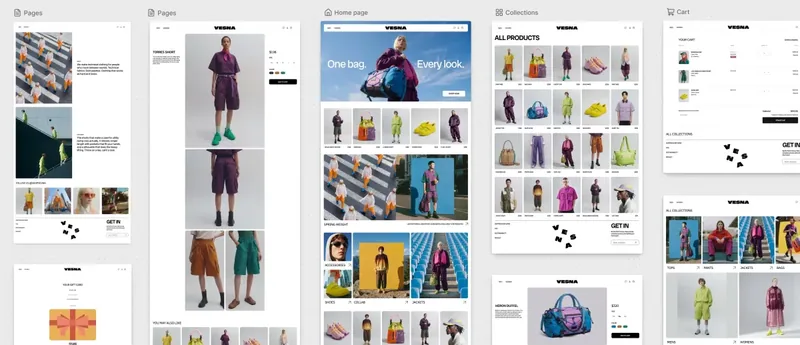
Shopify introduced Canvas on Thursday: merchants chat with Shopify's AI agent Sidekick to create and customize a site, with changes displayed in real time.
Per Shopify, the preview isn't static — it's the real code behind the store being rendered, so merchants can test full interactivity and animation and view pages as they'd appear across different screen sizes.
Sidekick takes screenshots of the work as it goes, so the agent sees the same thing the merchant sees while the site updates.
The context: Shopify's prior no-code builder meant rearranging modular sections and blocks within a theme, with deeper customization requiring code edits or a developer.
Why it matters for an independent practice: The relevant pattern for MMR isn't e-commerce — it's that 'describe the page, watch the real code render' is arriving in mainstream site builders. For a regen-med or cash-pay practice, that collapses the cost of spinning up and iterating a dedicated service-line or procedure landing page without waiting on a developer. The stewardship caveat is the same one that always applies in healthcare: agent-generated medical copy still needs physician review before it ships, or you've traded speed for the exact credibility problem item one is about.