Six physician organizations publicly reject the claim that AI is better informed than doctors
October 3, 2026 · 5 items
Six physician organizations publicly reject the claim that AI is better informed than doctors
Medical Economics · October 1, 2026Practice operations
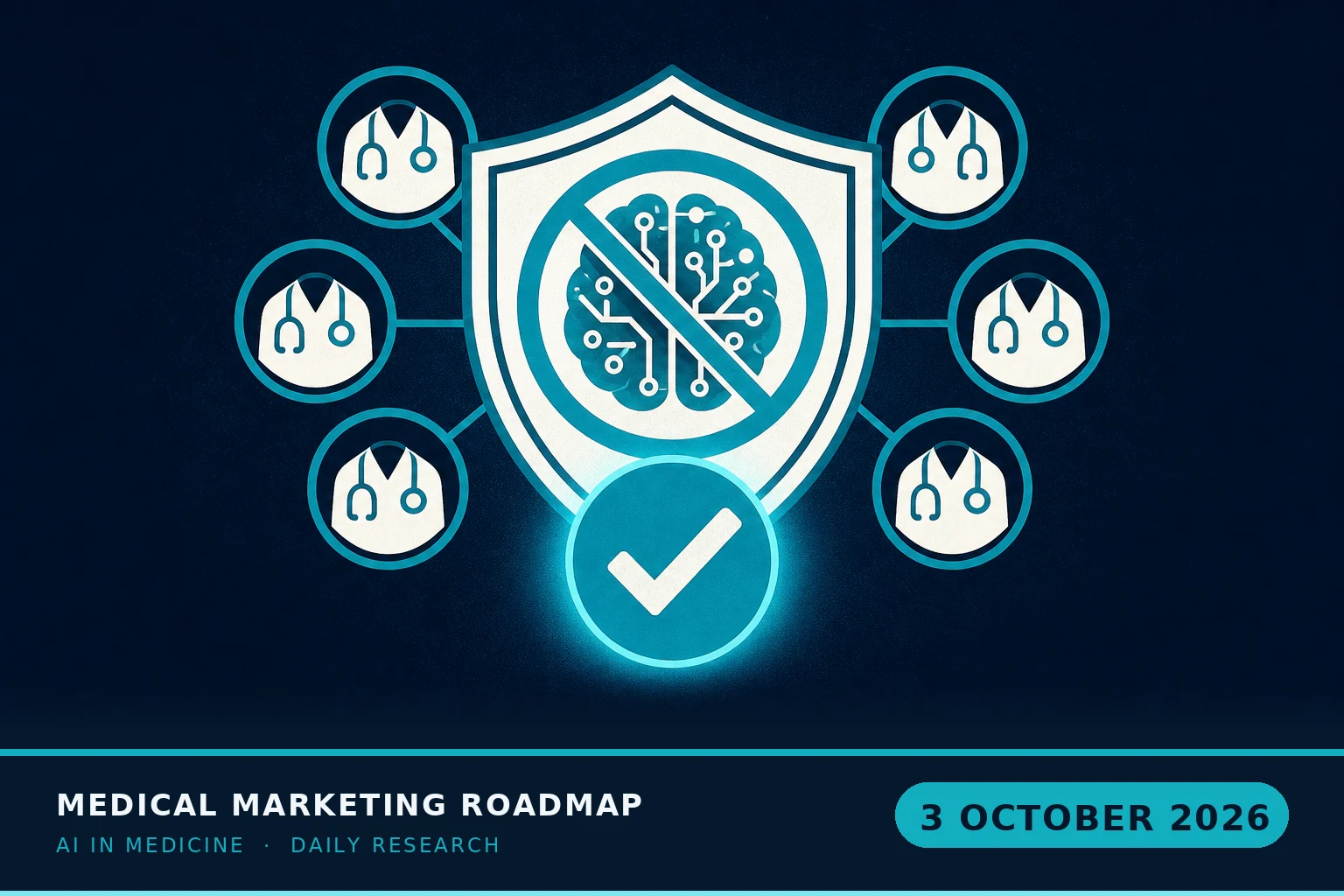
On Sept. 30 the AAFP, AAP, ACOG, ACP, ACS and AMA issued a joint statement saying claims that AI is inherently better informed than physicians — or that physicians can't be trusted to decide without first consulting it — "diminish physician expertise and risk undermining patients' trust."
Medical Economics reports the statement landed a day after the health secretary praised AI second opinions, and follows public assertions from federal leadership and AI industry representatives characterizing AI consultation as essential and implying malpractice risk for physicians who diagnose or prescribe without it.
The piece notes malpractice exposure is currently asymmetric: following AI recommendations that deviate from the standard of care may increase liability when outcomes are adverse — which is itself a brake on adoption until standards evolve.
It draws a usable line: low-risk operational uses (ambient documentation, summarization, billing) are widely acceptable, while decision support, ordering, renewals and messaging require rigorous validation beyond vendor claims.
Why it matters for an independent practice: This is the defensible public position an independent practice can adopt verbatim — AI in the workflow, physician in the judgment — and the operational/clinical split is a clean procurement filter for which tools get bought this quarter versus which get validated first.
ARPA-H puts up to $38M behind an AI "digital twin" of the critically ill patient at UVM
Healthcare IT News · October 1, 2026Practice operations
The Larner College of Medicine at the University of Vermont received up to $38 million over five years, milestone-based, under ARPA-H's CIRCLE program; the project is called ReSCUED and targets severe trauma, burns and sepsis.
Design detail worth noting: patient blood will be collected every six hours at multiple sites to measure cells, proteins and molecules, feeding a per-patient model that AI refines as the condition changes and that can be used to test an intervention virtually before it's given.
UVM cites 4.6 million Americans treated in ICUs annually at up to $70 billion a year, and claims digital twins could shorten ICU stays by as much as 25%.
Principal investigator Dr. Gary An, a UVM trauma surgeon: "The multidimensional dynamics of immune dysfunction is too complex for a person, even an expert, to comprehend… But we can train a computational model to do that." Validation of computational outcome prediction is targeted in the first three years, before clinical trials.
Why it matters for an independent practice: "Digital twin" and "personalized simulation" language will start showing up in longevity and regen-med marketing long before anything is validated — this is the dated, funded, five-year reality to measure those claims against, and a good answer when a patient asks whether the technology exists yet.
A new study catalogs 13,000 phrases that give AI-written prose away — and "dependable" is Opus 5.5's biggest tell
TechCrunch · October 1, 2026Patient acquisition
Marketing firm Graphite studied the writing habits of frontier models and found 13,000 phrases that appear at least twice as often in AI content as in human content — its working definition of a "tell."
Opus 5.5's standout tell is the word "dependable," which TechCrunch reports shows up 23 times more often than in human samples; models also lean on contrast-heavy constructions.
The older giveaways are gone: em-dash overuse and "delve" have been stamped out, so detection has moved to subtler distributional habits rather than a short blacklist.
Graphite chief AI officer Greg Druck told TechCrunch: "It turns out that Claude models are actually getting closer to the human word distribution over time. And for the GPT models, it's getting further away."
Why it matters for an independent practice: Physician-authored content only builds authority if it reads like the physician wrote it — pull the tells for whichever model your content workflow uses into a banned-phrase pass before publishing, and stop relying on em-dash folklore as your quality check.
Apple is adding controls to macOS Full Disk Access specifically because of AI agents
TechCrunch · October 2, 2026Buildable AI
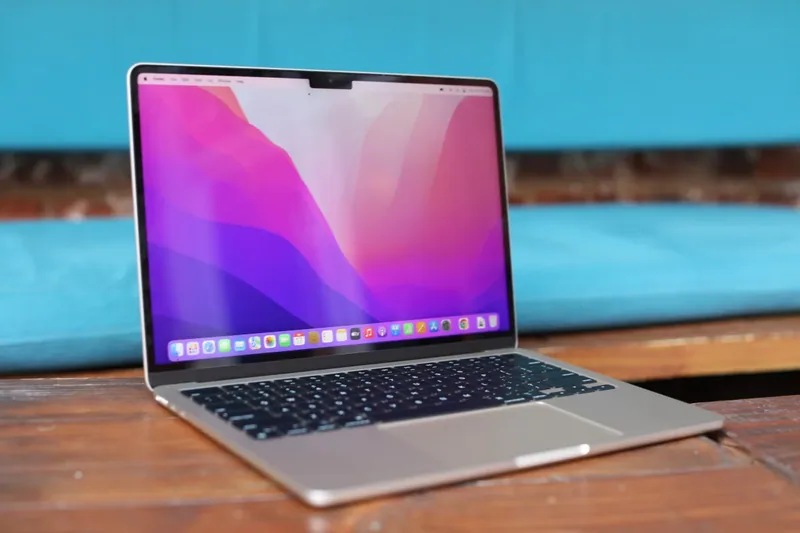
Apple announced it will introduce additional controls around the macOS "Full Disk Access" permission, warning that increasingly capable AI agents make broad access to users' files, messages, mail and browsing history riskier.
Full Disk Access was originally designed to let backups function properly — it predates the idea that the app holding it might be an autonomous agent reading everything it can reach.
The announcement came days after a journalist claimed Meta's Muse app on Mac read their private messages, a claim Meta disputed.
Why it matters for an independent practice: Go into System Settings on every staff Mac and read the Full Disk Access list today: an AI assistant installed by a practice manager inherits the clinic's downloaded records, scanned intake forms and email archive — PHI-adjacent material sitting outside the EHR's access controls and outside any BAA.
Nate Herk puts OpenAI's Dots and Meta's Muse head-to-head on memory, pricing and Slack/WhatsApp integration
Nate Herk | AI Automation · September 30, 2026Buildable AI
The video compares the two personal AI agents across features, pricing, memory, integrations and the experience of actually using them, per Herk's own description.
He says he covers how they fit into Codex, Slack, WhatsApp and everyday work, including bugs and limitations he ran into — and ends with which one he'd pick and who he'd recommend Muse to.
Chapters run First Impressions (0:00), Features and Memory (1:40), Slack/WhatsApp and Ecosystems (4:32), Pricing and Model Performance (6:58), Muse walkthrough (8:18), Dots walkthrough (10:57), Verdict (13:02).
Noted honestly: this is the creator's description, so it tells us what he tested, not what he concluded — the verdict is in the video, not in the text.
Why it matters for an independent practice: An assistant that lives inside Slack and WhatsApp with persistent memory is exactly the shape of a front-desk or marketing-ops agent for a small practice — and it's the same class of desktop agent Apple just restricted, so watch the integrations segment as a permissions question, not just a features one.