NIA puts $25M behind testing whether dementia AI tools actually work before they spread into clinics
October 9, 2026 · 3 items
NIA puts $25M behind testing whether dementia AI tools actually work before they spread into clinics
Longevity.Technology · October 7, 2026Regenerative medicine
UCLA Health received a five-year, $25 million grant from the National Institute on Aging to lead a national program evaluating AI tools for Alzheimer's disease and other dementias.
The program is APEX-ADRD — Accelerating Platforms for Evaluating and Executing AI Lifecycles in Alzheimer's Disease and Related Dementias. UCLA Health is the lead institution, working with Mayo Clinic and the University of Wisconsin.
Nothing new is being unveiled. The stated job is to find out which existing diagnostic and treatment tools hold up.
The article's framing of the gap being filled: AI products tend to reach clinics faster than the studies showing whether they help, and dementia care is one of the places they're heading. Dr. John N. Mafi, associate professor of medicine and co-director of UCLA Health's Innovations and Outcomes group, is named in the coverage.
Why it matters for an independent practice: For a longevity or cognitive-health practice, this is the evidence base arriving a step behind the sales deck — and it's a credibility position you can take now. 'We wait for APEX-ADRD-class evaluation before we deploy' is a differentiator against clinics buying whatever demos best.
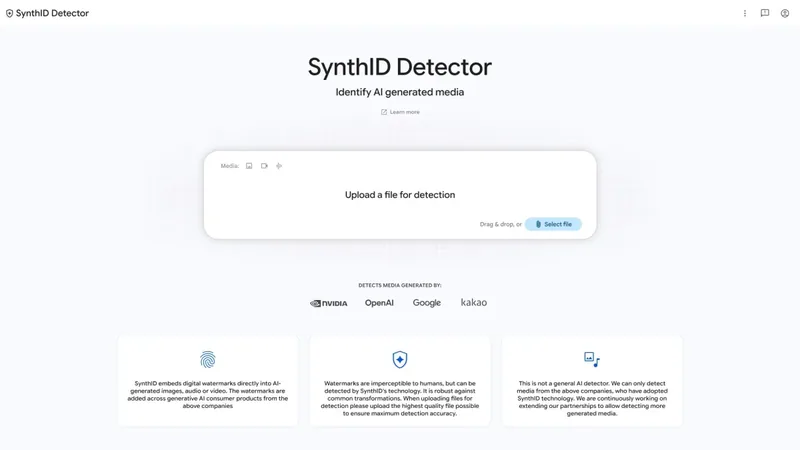
Google opened its SynthID AI-detection site to everyone, and says it already fields a million verification requests a day
TechCrunch · October 7, 2026Buildable AI
Google launched synthid.com on Tuesday, letting anyone check whether an image, video, or audio clip was AI-generated. Access had previously been limited to select journalists, media professionals, and researchers since Google I/O last year.
Supported formats: JPG, JPEG, PNG, BMP, WEBP, AVIF, HEIC, HEIF, TIFF, TIF, GIF for images; MP4, MOV, WEBM for video; WAV, MP3, OGG, FLAC, AAC, M4A for audio.
Coverage is broader than Google's own models — Nano Banana, Veo, Lyria, Gemini, Flow, ProducerAI and Vids all watermark with SynthID, and OpenAI, Nvidia and Kakao also support it. Apple is said to be adding support soon. Verification is baked into the Gemini app and Chrome.
TechCrunch is explicit that these tools are not infallible, citing Reuters reporting that Meta's AI image detector failed to identify some of its own cropped AI images.
Why it matters for an independent practice: Two practical uses for a practice. First, defensive: if a deepfaked 'physician testimonial' or a fabricated before-and-after shows up attached to your name, this is a free first-pass check. Second, vendor diligence: when a marketing contractor delivers 'original' photography or voiceover, you can spot-check it before it goes on a site where E-E-A-T and patient trust are the whole asset — while remembering a clean result is not proof.
Nate Herk argues fewer instructions beat more — and runs Claude Code's /doctor on his own setup to prove where context bloat hides
Nate Herk | AI Automation · October 8, 2026Buildable AI
The video walks through Anthropic's context engineering guidance, with the stated premise that more instructions don't always mean better results from Claude Code.
Chaptered build: Anthropic's New Context Rules (0:00), Testing Claude With Fewer Instructions (4:13), What Context To Keep (6:01), Auditing My Setup With /doctor (7:04), Fixing My YouTube Workflow (9:43), Scheduling AIOS Audits (10:51).
The description says you'll learn what to keep in CLAUDE.md and skills versus what to load only when needed — and how to make regular audits a standing part of an AI operating system.
Herk demonstrates the fix on his own live YouTube workflow rather than a toy example. Note this is a creator description, not a transcript — the specific findings from his /doctor run are not stated in the text, only that the audit was run.
Why it matters for an independent practice: The transferable idea is the scheduled audit, not the tool. Any practice running AI on repeatable work — intake summaries, recall messages, service-page drafts — accumulates stale instructions that quietly degrade output. Putting a recurring audit on the calendar is what turns an automation from a gimmick into a system that keeps working.