Senate HELP chair floats a health-AI bill that would split FDA/ONC oversight and create a payment pathway — comments due Dec. 1
November 3, 2026 · 5 items
Senate HELP chair floats a health-AI bill that would split FDA/ONC oversight and create a payment pathway — comments due Dec. 1
Healthcare IT News · November 2, 2026Practice operations
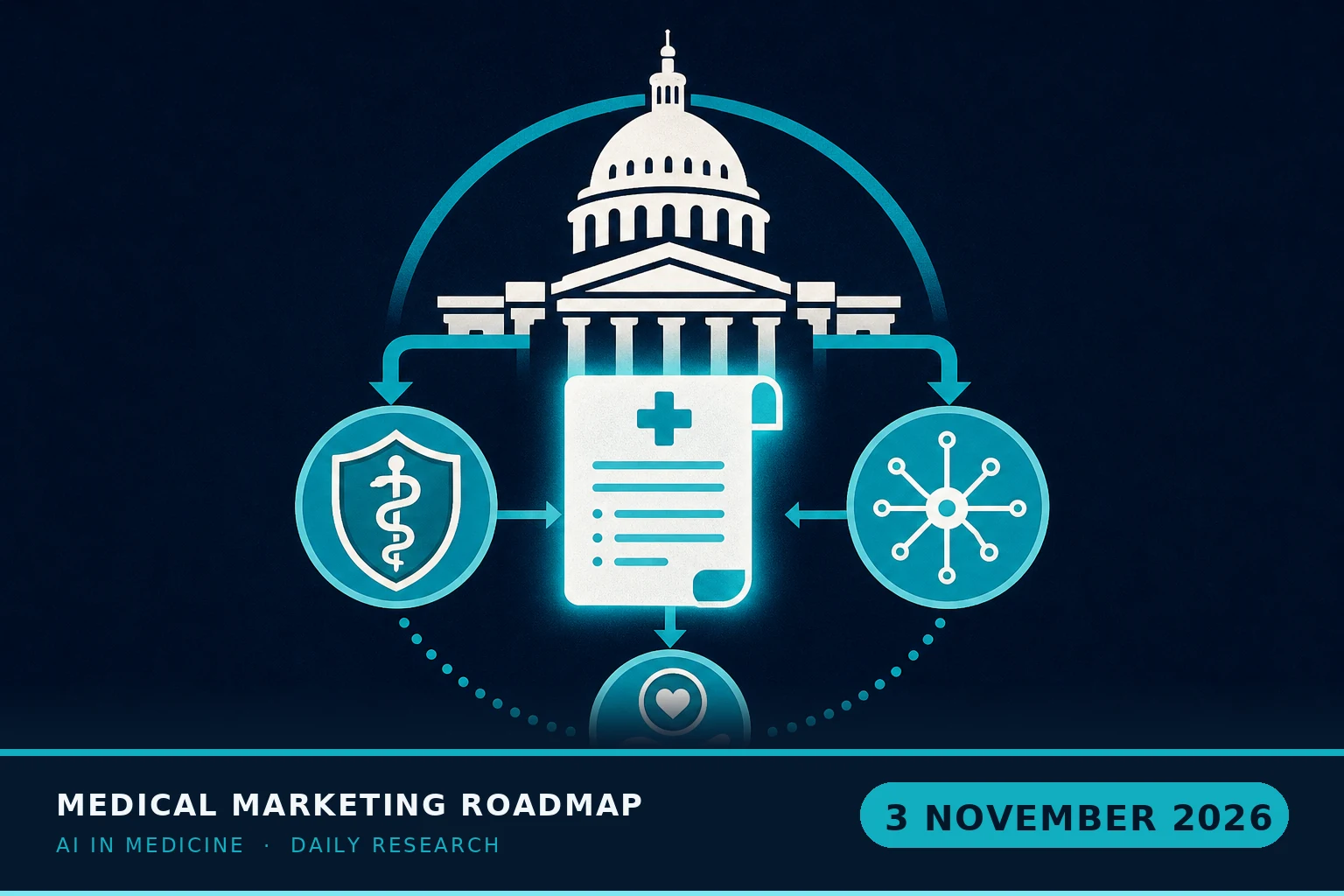
Sen. Dr. Bill Cassidy, R-La., current chairman of the Senate HELP Committee, published a legislative discussion draft — unintroduced, meant to gather feedback — called the Protecting Americans Through Intelligent, Ethical, and Transparent Artificial Intelligence in Health Care Act (PATIENT AI Act).
Per the summary, any future bill would specify whether a given AI-based technology falls under FDA or ONC oversight, grant the FDA new authority to review software changes on a rolling basis, and create a payment pathway to support adoption of AI-based tools.
It would also require HHS to implement AI in its own internal processes and to release guidance ensuring AI deployment protects patient privacy and security.
Cassidy is seeking stakeholder feedback before Dec. 1; his office frames the goal as "regulatory predictability while prioritizing patient safety."
Why it matters for an independent practice: A reimbursement pathway for AI tools is the single variable that decides whether an independent clinic can afford clinical AI at all — and the comment window closes Dec. 1, so a specialty society or a solo physician who wants a say has about four weeks to send one.
One staffer's spreadsheet upload to a public AI site exposed 3,182 Johns Hopkins patients
Healthcare IT News · October 29, 2026Practice operations
An employee at Johns Hopkins Bayview Medical Center uploaded a spreadsheet of patient data to a public-facing AI website that had not been approved by the health system for that use; 3,182 patients are being notified.
The data covered people treated between May and September 2026 and may have included names, dates of admission and treatment, medications administered, provider names, medical record numbers and account numbers — but not Social Security numbers or financial data.
The breach was discovered Sept. 21 during an internal review. Bayview deleted the initial prompt and related history from the tool and contacted the tool's developer for "further deletion and corrective measures," per WBAL-TV.
Patients were offered a year of free credit monitoring; the system says it is reinforcing policy and training on "restrictions on use of unauthorized applications and artificial intelligence tools."
Why it matters for an independent practice: This is the shadow-AI scenario in its cheapest form — no hacker, no ransomware, just a staffer trying to crunch numbers — and a two-page written list of approved tools plus a named person to ask is a defense an independent practice can put in place this week.
ONC's HTI-5 final rule punts AI information-blocking policy to HTI-6 and extends legacy data exchange to 2030
Healthcare IT News · October 29, 2026Practice operations
HTI-5 — the Health Data, Technology, and Interoperability: Deregulatory Actions to Unleash Prosperity Final Rule — was published in the Federal Register on Oct. 28 and removes 14 certification criteria, including six annual Insights Condition reporting measures for EHR developers.
The draft had proposed removing 34 of the program's 60 criteria; ONC left many in place and, notably, deferred rulemaking on AI-related information blocking policies to HTI-6, a draft of which is expected next month.
ONC extended the timeline for removing C-CDA-based document exchange requirements to Jan. 1, 2030, because public health and safety-net organizations aren't on FHIR — "Most public health data architectures are C-CDA-based or Excel spreadsheets," said Jonathan French of HIMSS, and "there's not really a funding mechanism to move them in that direction."
Dr. Don Rucker, former National Coordinator and chief strategy officer at 1upHealth, called the removal of the 2016 Cures Act "all data" access-at-no-cost provision "maybe the biggest question" in the rule.
Why it matters for an independent practice: The proposed duty to answer AI-generated requests for patient data is the provision that would have landed hardest on small practices, and it's now delayed into HTI-6 — meaning a draft lands next month and the time to read it is before it's final, not after.
OpenAI is collapsing ChatGPT's Chat and Work tabs into one surface — and putting ChatGPT and Codex on a shared token budget
TechCrunch · November 2, 2026Buildable AI
Per an email sent to users, OpenAI is merging the Chat and Work tabs inside the ChatGPT experience, starting with select users for feedback before a wider rollout; Codex remains a separate experience in the desktop app.
The stated pitch: "This will enable you to move from exploring an idea to having ChatGPT carry it through, all in one place. You can bring in your files and plugins and ask ChatGPT to build a website, create a presentation, or do things for you on the web, while reviewing and guiding its work."
The catch OpenAI disclosed: ChatGPT and Codex will draw tokens from the same allowance pool, so depending on usage and model, some people "might need to wait for resets more frequently."
Anthropic made the same move first, merging Claude's chat and Cowork functions into one interface in September.
Why it matters for an independent practice: If your practice runs content drafting and a build/automation workflow on the same paid seat, those two jobs now compete for one quota — worth checking before a marketing push stalls mid-month because someone burned the allowance on a side project.
Akron Children's digital chief says ambient documentation is spreading in pediatrics, with claim denials next on the AI list
HIMSS TV · October 29, 2026Practice operations
A short HIMSS TV interview with Harun Rashid, chief digital information officer at Akron Children's, filed under Healthcare IT News' Artificial Intelligence topic.
The publisher's description says AI is helping more children's health systems create clinical documentation with ambient listening, and that it will soon be used to manage claim denials.
Thinness disclosed: this is the description of a video, not a transcript — no runtime, no numbers and no stated results are given, so treat the denials-management piece as what the clip covers, not as a demonstrated outcome.
Why it matters for an independent practice: Denial management is the next place ambient-AI vendors will point after the scribe sale lands, and an independent practice evaluating that pitch should ask for the same thing this clip doesn't give: numbers.