Claude now connects to live bank and card accounts through Plaid — a persistent data pipe, not a file upload
November 8, 2026 · 4 items
Claude now connects to live bank and card accounts through Plaid — a persistent data pipe, not a file upload
TechCrunch · November 5, 2026Buildable AI
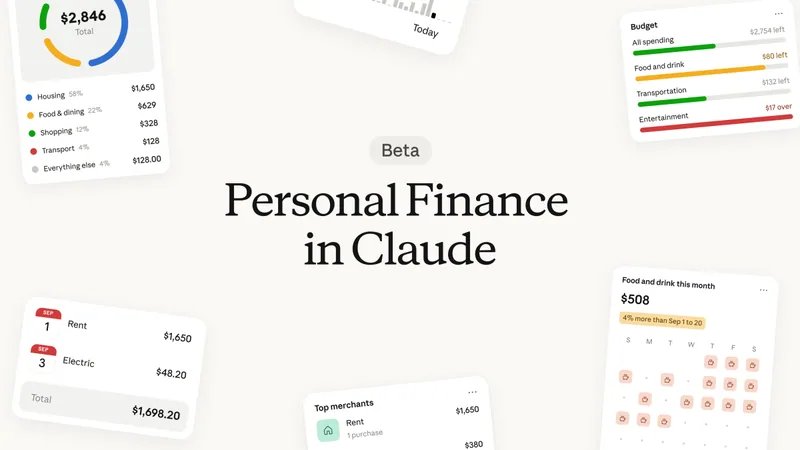
Anthropic announced Thursday that Claude is getting a new tool called "Personal Finance," designed to help users keep track of their money (Aisha Malik, 10:00 AM PST, Nov 5).
Per TechCrunch's summary, users connect their bank and card accounts through Plaid and then ask Claude questions about their finances — the account linkage is the product, not a one-time export.
The coverage presents this as a consumer feature; nothing in the article describes a business tier, an administrative-safeguards posture, or any agreement covering regulated data.
Why it matters for an independent practice: This is the shape the next vendor pitch to your practice manager will take — "just link the account and ask questions." The stewardship question to settle before anyone links a practice bank, merchant, or billing account to a chat assistant is who holds the credentials, what the retention terms are, and whether that pipe is covered by any agreement you've actually signed. Same test applies verbatim the day an AI vendor asks to link your PM or EHR system.
Amazon is putting Alexa in your text messages — TechCrunch calls texting "the currently most popular bandwagon" for AI agents
TechCrunch · November 6, 2026Buildable AI
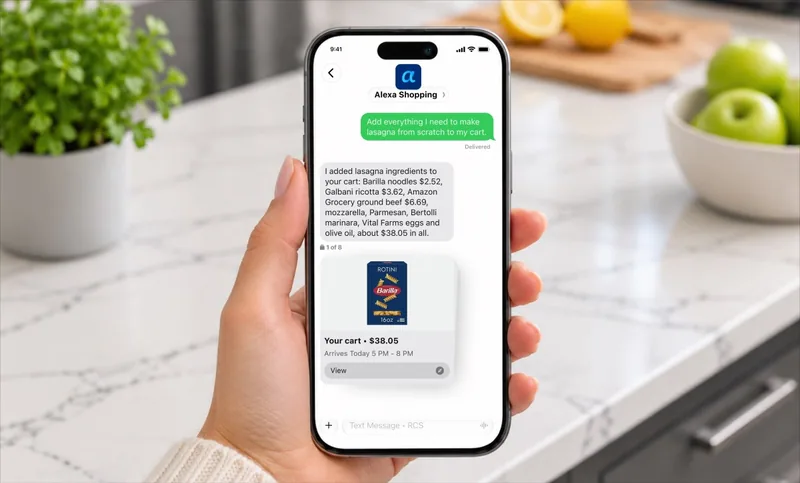
Amazon said Friday it is launching a feature that lets customers chat with its Alexa AI agent over text messages to help them shop (Ivan Mehta, 6:10 AM PST, Nov 6).
TechCrunch's summary states Amazon said the feature will roll out to millions of users in the coming weeks.
The move follows Amazon blocking Meta's Muse agent from its platform, per the headline — i.e., the big platforms are fighting over who owns the texting interface to the consumer.
Why it matters for an independent practice: SMS is the one channel a solo practice already owns outright — no algorithm, no intermediary. If Amazon is spending to make texting the default way people transact with an agent, the practice-side build is obvious and cheap: an agent on the practice's existing SMS number that handles reschedules, intake forms, and pre-visit instructions, with a named human on escalation. Doing it yourself keeps the patient relationship direct instead of renting it from a platform later.
A hobbyist used an OpenAI model to find a severe Ubuntu server vulnerability — now logged as CVE-2026-109518
TechCrunch · November 5, 2026Buildable AI
Max Justicz, CTO and co-founder of the startup Charge Robotics, used an OpenAI model to find a severe vulnerability that, if exploited, could allow hackers to take control of servers running Ubuntu, the widely used open-source Linux-based OS (Tim Fernholz, 11:06 AM PST, Nov 5).
TechCrunch describes Justicz as having a hobbyist's interest in cybersecurity — the finding came from someone outside the security industry, with a model doing the heavy lifting.
The piece frames OpenAI's newest cybersecurity model as arriving while AI labs face scrutiny of their work to protect digital infrastructure.
Why it matters for an independent practice: The same capability that lets a hobbyist surface a server-takeover bug is available to anyone probing the infrastructure your practice's data sits on. The concrete action this week isn't to audit anything yourself — it's to ask your IT provider and your EHR/hosting vendor two questions in writing: what their patch cadence is, and whether they're now using AI-assisted vulnerability discovery defensively. Attackers are.
Meta opened animated AI avatar video calls to every US user — face-to-face with a synthetic agent is now a mainstream habit
TechCrunch · November 5, 2026Buildable AI
Muse Voice — a feature that lets users call and video chat with Meta's consumer AI agent, Muse — is now available to everyone in the U.S., the company announced Thursday (Sarah Perez, 11:48 AM PST, Nov 5).
TechCrunch describes the agent as taking calls as a customizable animated avatar; the feature was first introduced at Meta's Connect developer conference.
The rollout comes ahead of the launch of a Tamagotchi-like wearable designed to bring Muse to life.
Why it matters for an independent practice: Within months, patients will be fully habituated to holding a video conversation with an animated AI face. That cuts both ways for a practice: avatar-fronted intake or FAQ video becomes acceptable to patients far faster than expected, and the cost of being caught using a synthetic face without labeling it goes up just as fast. If you deploy one, say plainly on screen that it is AI and whose practice it speaks for — the physician's real face stays reserved for the content that carries their authority.