Ramp's card data shows enterprise AI usage still climbing while AI spending has flattened — price cuts and cost controls are biting
November 9, 2026 · 3 items
Ramp's card data shows enterprise AI usage still climbing while AI spending has flattened — price cuts and cost controls are biting
TechCrunch · November 6, 2026Buildable AI
TechCrunch reports on a new Ramp report whose headline finding is blunt: 'Companies are using more AI than ever, but they're not spending more on it.'
TechCrunch attributes the flattening to two things — vendor price cuts and smarter cost controls among the biggest spenders — and frames it as a challenge to investor assumptions about AI hypergrowth, with Anthropic nearing an IPO.
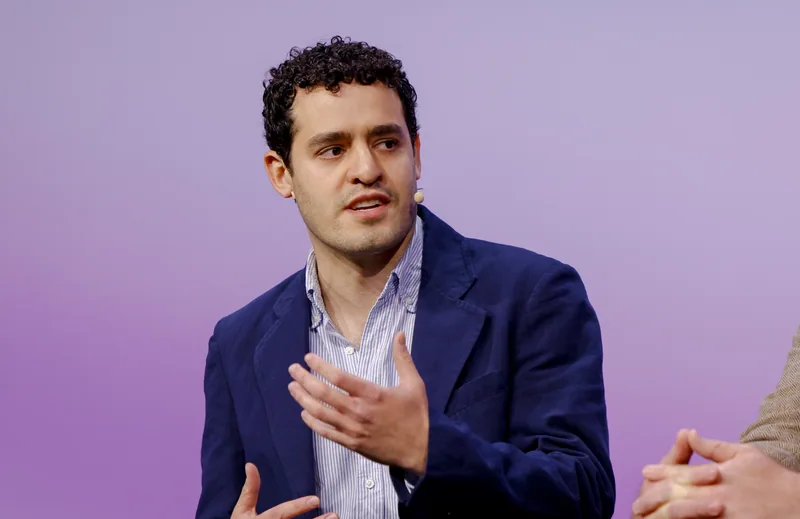
Ramp's lead economist Ara Kharazian is the named source behind the data in the piece.
Caveat worth saying out loud: the Ramp report itself is the primary here, and only the reporting on it was readable at run time — the underlying report's own publication date is not confirmed in the article text.
Why it matters for an independent practice: If the biggest buyers are getting the same AI for less money, so can a practice. This is the week to re-price every AI line item on the P&L — scribe seats, chatbot/intake vendors, content tools — and to refuse multi-year lock-ins at today's rate card. Flat spend against rising usage means the vendor has room to move, and an independent clinic that negotiates keeps that margin instead of handing it to a platform.
Palo Alto Networks is in talks to buy AI-agent security startup Clutch for $500M — roughly 6x its last valuation
TechCrunch · November 5, 2026Buildable AI
TechCrunch reports Palo Alto Networks is in talks to acquire Clutch, an AI agent security startup, for $500 million.
Clutch is backed by Lightspeed and SignalFire and was last valued at $85 million, according to a source cited by TechCrunch.
The story is reported as talks, not a signed deal — treat the number as reported, not final.
Why it matters for an independent practice: The signal matters more than the deal: securing the credentials an AI agent carries is now a category a major security vendor will pay nine figures for. Before a practice lets an agent into the inbox, the scheduler, or anything touching the EHR, ask the vendor the same question these buyers are paying to answer — what identity does this agent authenticate as, who can revoke it, and is it covered by the BAA? That question costs nothing to ask and is far cheaper than the incident.
Automating stem cell editing could widen who can manufacture gene therapies, Stanford's Matthew Porteus tells Pharmacy Times
Pharmacy Times · November 6, 2026Practice operations
Pharmacy Times' Nov 6 byline (Ryu Kariyawasam-Chavez) carries the claim that automated stem cell editing could expand gene therapy manufacturing capacity.
The expert quoted is Matthew Porteus, MD, PhD, speaking in an ASTCT (American Society for Transplantation and Cellular Therapy) context.
Thinness disclosed: the article body available to this run cut off at the first line of Porteus's remarks, so the specific mechanism, platform, and any numbers are NOT verified here — the date and the attribution are. Read the source before quoting it anywhere.
Why it matters for an independent practice: Manufacturing is the gate on cell and gene therapy — if editing and expansion become automated rather than artisanal, the set of sites that can credibly participate widens past a handful of academic centers. That is the long-run question for every regenerative-medicine practice: does the supply chain commoditize in a way that lets independents play, or in a way that consolidates around whoever owns the robot. Worth tracking, not worth acting on from this one piece.