UTMB cut specialty wait times from 93 to 65 days by having an AI agent pre-read every referral chart — with booking still left to staff
November 10, 2026 · 4 items
UTMB cut specialty wait times from 93 to 65 days by having an AI agent pre-read every referral chart — with booking still left to staff
Healthcare IT News · November 9, 2026Practice operations
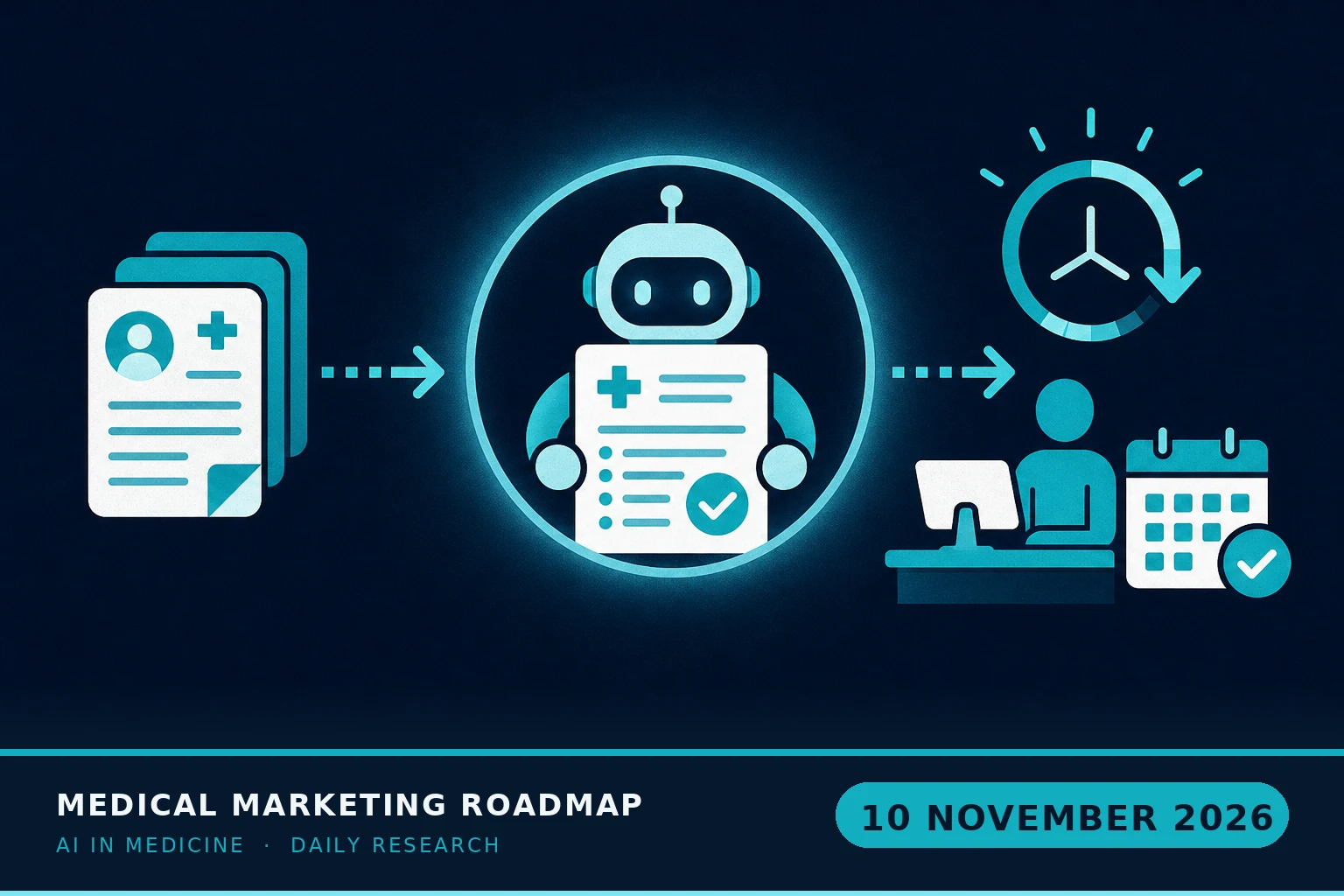
Average wait times fell from 93 to 65 days across four specialties after University of Texas Medical Branch added referral triage to an existing Bunkerhill Health deployment — framed as a new capability for an agent already trusted and governed, not a new procurement.
The multi-agent workflow reads the full chart behind each referral — order, clinic notes, labs, imaging, outside records — then applies a playbook UTMB's own physicians wrote, scoring urgency and complexity into a 0–10 priority and pointing to a pathway: subspecialty clinic, advanced practice provider, e-consult, or redirect. Every recommendation cites the chart evidence so a scheduler can check it in seconds.
Hard guardrails from Dr. Salim Hayek, VP and chief transformation officer: anything that looks like an emergency goes to the ED before any scoring, and no booking is automated. "The agent recommends, and our people decide."
Each division named an AI champion — compensated for the time — to write and validate its specialty's playbook; monthly reviews inform adjustments, and recommendations surface to schedulers through Epic. Hayek's framing of the problem: "a referral that says 'abnormal thyroid labs' waits in the same line as one for a suspicious thyroid nodule."
Why it matters for an independent practice: This is the cleanest template yet for an independent or specialty practice: the physicians write the rules, the agent reads the chart nobody has time to read, and a human books. If you have a waitlist, the buildable version is a triage playbook your own doctors author — authority stays with the clinician, throughput goes up.
Consolidating a sprawling tech stack is worth 10–30% of total cost of ownership — and one hospital replaced 95 point solutions with a single purchase
Healthcare Finance News / HIMSSCast · November 6, 2026Practice operations
Dr. Peter Stetson, CHIO of TigerConnect, argues the "best of breed" era left hospitals with far too many applications and broken workflows that drove physician burnout; moving to a core set of wisely integrated point solutions delivers a 10% to 30% improvement in total cost of ownership, a quicker deployment timeline, easier upfront training and fewer vendors to wrangle.
KLAS analyst Paul Warburton says stack reduction may not be the primary driver in an AI buying decision but is among the top three — and cites one hospital that reduced 95 point solutions with one purchase.
The episode's buying checklist is usable verbatim: does the AI fit the existing workflow; is the recommendation actually actionable by the clinician (avoid "swivel chair" solutions); is it solving a problem the provider wants solved; can the vendor show projected value was captured at the pilot-to-scale gate; and does it have FHIR API integration.
Stated goals that ROI is measured against, consistently across providers: increasing revenue, improving margins, gaining efficiencies, and improving patient outcomes.
Why it matters for an independent practice: Independent practices buy AI one demo at a time and end up with six logins nobody uses. Take the checklist into your next vendor call — especially "show me the value was captured" and the swivel-chair test — and count how many tools a new purchase retires before you count what it adds.
Automattic launched Spacefast, a hosting layer that turns vibe-coded apps into working sites with databases, auth and analytics
TechCrunch · November 9, 2026Buildable AI
WordPress.com owner Automattic debuted Spacefast on Monday as infrastructure for vibe-coded apps — databases, authentication, file uploads, emails and analytics — to make them functional websites, apps or services.
TechCrunch positions it against Lovable and Emergent, which offer both the build interface and the runtime; Automattic is coming at it from the content-management side of the web.
The pitch is the gap that kills most AI-generated internal tools: a prompt can produce an app, but logins, stored records and transactional email are what make it real.
Why it matters for an independent practice: The practical MMR/ops read: a practice manager can now stand up a small internal tool — an intake triage form, a referral tracker, a campaign dashboard — without hiring a dev shop. The stewardship question comes first, though: file uploads and a database mean the moment anything patient-identifiable touches it, you need a BAA and an answer for who can reach that data. Build the non-PHI tool first.
Medium shipped TK, a private notebook app that puts an AI assistant inside the editor — invoked by typing "@TK"
TechCrunch · November 9, 2026Buildable AI
Medium launched TK on Monday, a new private notebook app designed to make it easier to turn ideas into written words by incorporating an AI assistant into the editor itself; users summon it by typing "@TK" followed by their request or prompt.
The name borrows the publishing and journalism placeholder "TK" — short for "to come" — used to mark where missing information will be filled in later.
TechCrunch frames the launch as Medium embracing AI-assisted writing despite growing controversy over the technology's role in publishing.
Why it matters for an independent practice: The shape matters more than the app: assistance summoned inline, at the point of a gap, inside a doc the human owns — which is exactly how physician-authored content should be produced. A doctor dictates the clinical substance and calls the assistant only for the missing connective tissue. The inverse — an AI drafting the whole piece under a physician's name — is the thing that erodes the credibility the content exists to build.