Weill Cornell is notifying patients after radiology PHI was fed into AI tools without authorization — the second shadow-AI incident at a major academic center in weeks
November 11, 2026 · 5 items
Weill Cornell is notifying patients after radiology PHI was fed into AI tools without authorization — the second shadow-AI incident at a major academic center in weeks
Healthcare IT News · November 10, 2026Practice operations
Weill Cornell Medicine says that during a radiology research study this past June, information from Weill Cornell Imaging used at NewYork-Presbyterian "was entered into artificial intelligence tools and processed using machine learning without authorization and in violation of WCM policies." WCM discovered it on Sept. 6, suspended the research activity and requested all involved data be deleted.
Exposed data included medical record numbers, radiology accession numbers, dates/times and places of service, and clinical information such as diagnoses, treatment, surgical and procedural histories and medication information. It did not include names, addresses, phone numbers, emails, SSNs or financial data, and WCM says it has found no evidence of misuse.
Executive Editor Mike Miliard notes this is the second shadow-AI data incident at a major academic medical center in the past few weeks — in October, a Johns Hopkins Bayview staffer reportedly uploaded a spreadsheet to a public AI website that hadn't been approved for use, exposing data of more than 3,000 patients.
WCM's remediation is education, not technology: "We have also provided additional education to reinforce compliance with WCM's requirements for the appropriate use of AI tools."
Why it matters for an independent practice: Two documented incidents in a month, both from staff using an unapproved tool on real patient data — an independent practice should this week write down which AI tools are approved, which are banned, and who signs off, because a one-page policy plus a named owner is the entire difference between these two outcomes.
OpenAI launched business profiles in ChatGPT, giving companies a way to control how users interact with them inside the assistant
TechCrunch · November 10, 2026Patient acquisition
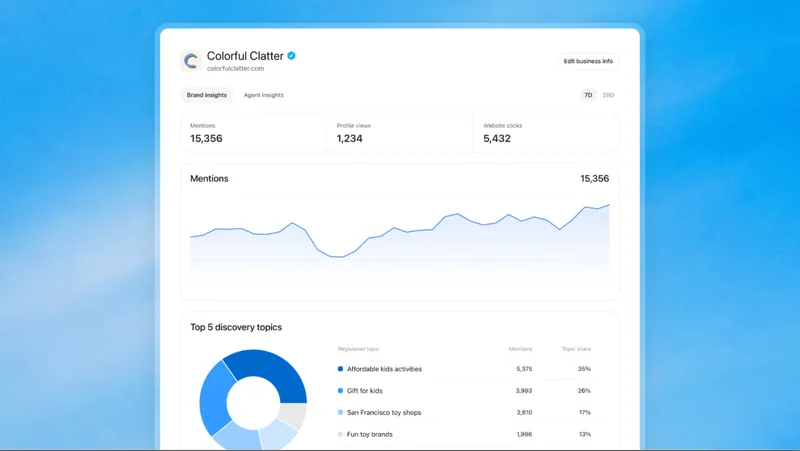
Reporter Lucas Ropek frames it plainly: "In an effort to make ChatGPT an even better consumer discovery engine, OpenAI is launching a host of new features designed to help companies control how users interact with their businesses."
TechCrunch's own summary of the move: OpenAI "is looking to make ChatGPT a more robust consumer discovery engine, and a host of new features seek to empower businesses to help it do that" — the headline comparison is explicitly to Google.
Honest disclosure: the article text available to this run is the lede and summary only, so the specific profile fields, eligibility and rollout mechanics are not verified here — treat the direction as the finding, not the feature list.
Why it matters for an independent practice: A claimable business profile inside ChatGPT is the GEO equivalent of Google Business Profile — if it works the way GBP does, the practices that claim and populate theirs early will own their own name in the assistant, and the ones that don't will be described by whatever ChatGPT scraped. Put 'check for ChatGPT business profile availability' on the MMR checklist now.
Adobe shipped an MCP that lets ChatGPT, Claude and Gemini drive Adobe features directly — plus always-on agents in Photoshop, Premiere and Firefly
TechCrunch · November 10, 2026Buildable AI
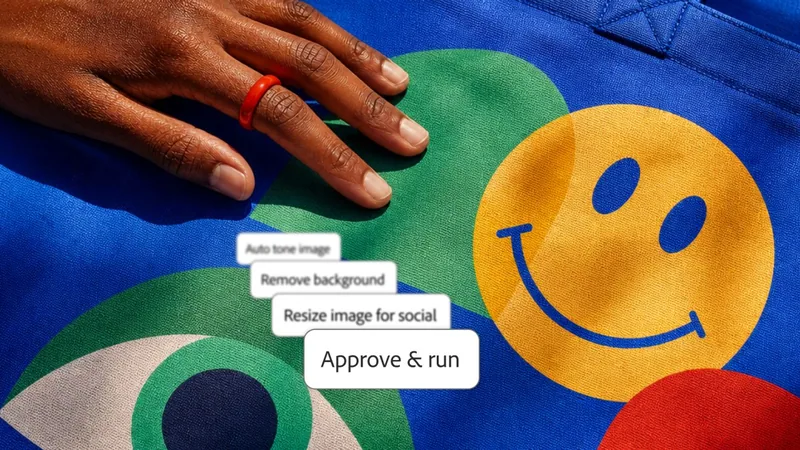
Announced at Adobe MAX in Miami: AI added across Photoshop, Premiere, Illustrator and InDesign, plus a released Model Context Protocol (MCP) "that lets other chatbots like ChatGPT, Claude, or Gemini use Adobe features."
Firefly moves onto Figma's turf with a prototyping tool in private beta called Builder, a tool for on-brand graphs, and an image editor that changes one part of an image without touching other objects.
A new Firefly video tool assembles a video from clips, images and sound effects, and Adobe is making its agent "proactive and always on so that it can get more context about work and be present for any action."
Reported by Ivan Mehta, 6:05 AM PST, November 10, 2026.
Why it matters for an independent practice: The MCP is the buildable piece: a practice's content workflow can now call Adobe from the same assistant that drafts the post, so a physician-authored article can go to on-brand graphic and short video without a designer in the loop. The 'always on, proactive' agent is the part to scope carefully — decide what it is allowed to see before you install it on a machine that also opens patient material.
Oura is buying AI-native primary care startup Counsel Health for $625M, weeks after shelving its IPO
TechCrunch · November 10, 2026Regenerative medicine
Oura announced Tuesday it is acquiring Counsel Health, described as an AI-native primary care company and an AI-powered healthcare platform, for $625 million.
The deal comes a few weeks after Oura postponed its up-to-$2.2 billion IPO indefinitely, citing "uncertainty in the IPO market" — meaning the company chose to spend on clinical capability rather than wait for public markets.
Reported by Aisha Malik, 11:23 AM PST, November 10, 2026; the TechCrunch text available here stops short of the full description of Counsel Health's model.
Why it matters for an independent practice: A ring on a patient's finger is being wired to an AI primary-care layer — that is a direct play for the first conversation a health-curious, cash-pay, longevity-minded patient has, which is exactly the patient an independent regen-med clinic depends on. The defense is relationship and interpretation: be the physician who reads their wearable data with them, rather than competing with the device.
Insilico open-sourced a longevity AI built with David Sinclair that turns a patient's scattered health data into checkable N-of-1 experiments
Longevity.Technology · November 9, 2026Regenerative medicine
Longevity Grok — full name Personal Longevity Superintelligence (PLSI) — was built for the Grok Bot platform with Harvard geneticist Dr David Sinclair, and Eleanor Garth reports its code is open for anyone to read.
It pulls blood panels, glucose traces, methylation data and wearable exports — "the usual quantified-self debris, scattered across portals" — into one longitudinal record.
From that record it derives measures such as PhenoAge and HOMA-IR and proposes lifestyle interventions, framed by the publisher as turning personal health data into checkable N-of-1 experiments.
Disclosure: the article is free but gated after the opening section behind a no-payment account wall, so the specifics above are everything readable without registering.
Why it matters for an independent practice: Longevity patients are about to arrive at the clinic with an open-source agent's PhenoAge read and a proposed protocol. A regen-med practice can either be surprised by that or get ahead of it — pull the repo, know what the tool actually computes, and position the physician as the one who validates or corrects it. That is a credibility advantage no consumer tool can take.