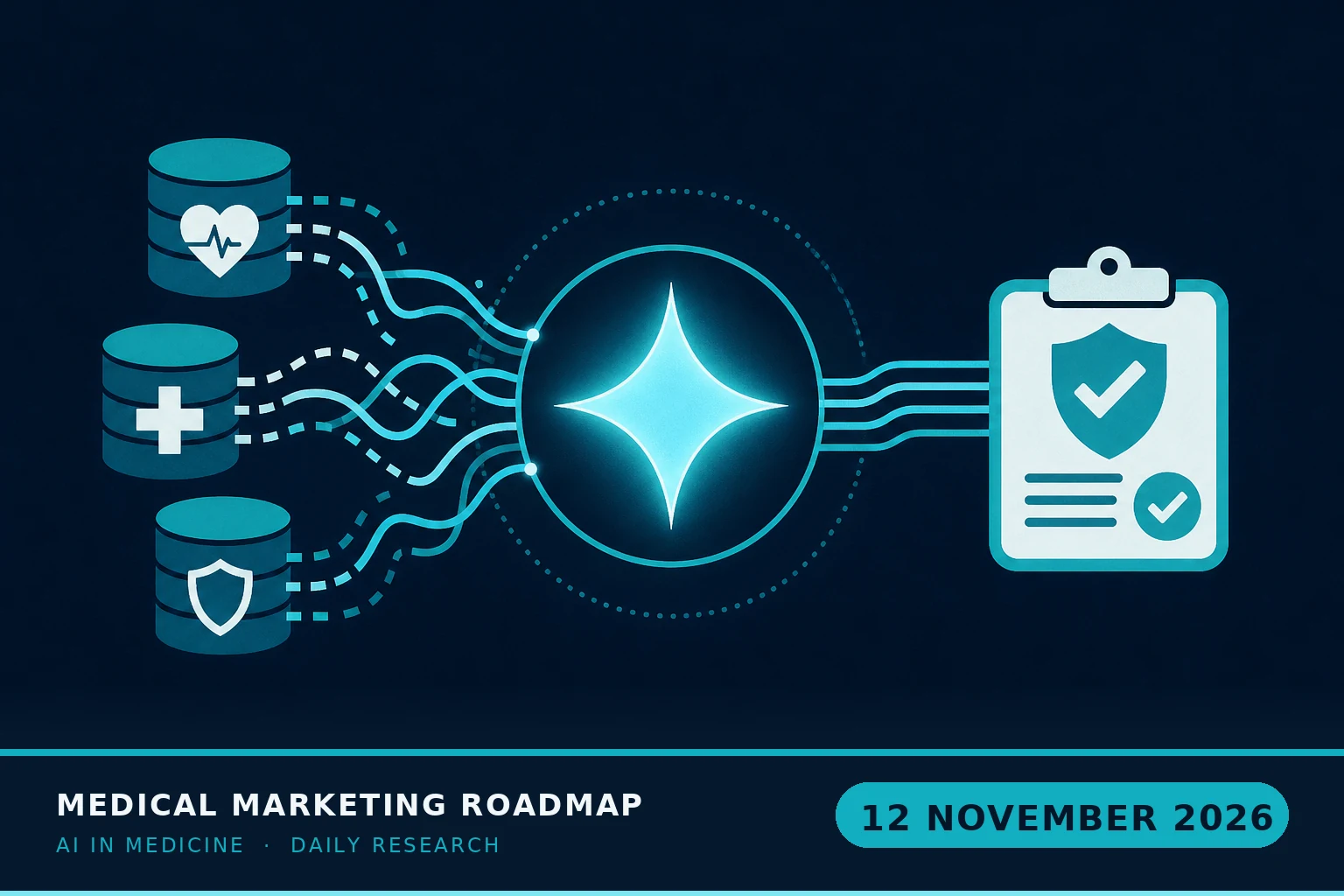
Google Cloud launches Gemini for healthcare with HCA, Northwell and Highmark as first partners — aimed squarely at prior auth and EHR data silos
November 12, 2026 · 5 items
Google Cloud launches Gemini for healthcare with HCA, Northwell and Highmark as first partners — aimed squarely at prior auth and EHR data silos
Healthcare IT News · November 11, 2026Practice operations
Google Cloud CEO Thomas Kurian described the tool in a company blog post as a "single, always-on agent for work where employees delegate an objective, and the agent plans the steps, retains organizational context, and routes across the best models to deliver finished outcomes inside the tools teams already use."
Initial launch partners are HCA Healthcare, Highmark Health and Northwell Health, with Blue Cross Blue Shield of Massachusetts and the American Society of Clinical Oncology also named. Stated use cases: tracking longitudinal patient history across care settings, and assembling prior-authorization packets before submission to reduce claims denials.
It is built from the Gemini agent introduced in October and, per Kurian, ships with "enterprise-grade identity administration, fine-grained access control, and centralized policy management directly into its runtime" — it links EHRs, billing platforms, clinical guidelines and Medicare datasets.
HCA chief clinical officer Dr. Michael J. Schlosser said in a Google-provided statement that HCA is "exploring how Gemini can interpret and synthesize complex patient information from multiple electronic health record systems and care settings." Google research cited in the piece says clinicians can spend as many as 28 hours per week wrangling needed information.
Why it matters for an independent practice: The capability independent practices lose the most hours to — prior auth and chasing records across systems — is now being productized for the largest systems first. Two things to do: put "agentic prior auth" on the question list for your next EHR or RCM vendor call, and demand the same access-control and BAA specificity Google is advertising to HCA before any agent touches your chart data.
Allina Health says AI surgical scheduling unlocked 689 hours of robotics capacity at a nearly six-times annualized ROI
Healthcare IT News · November 10, 2026Regenerative medicine
COO Dominica Tallarico of the 12-hospital system screens every technology against four goalposts: "Does new technology improve quality and safety, make care more accessible, support the clinicians, or create a better patient experience?"
Working with AI operations vendor Qventus, Allina says its proudest result has been "unlocking 689 hours of robotics capacity and driving a nearly six-times annualized ROI with the vendor's Surgical Growth Solution." The article notes a cancelled surgery costs between $3,350 and $8,600 including administrative rework, OR time and surgeon downtime.
The vendor relationship is described as co-development, not procurement: "We take an idea, they build technology around it, and we pressure-test it for effectiveness."
Allina is early in auto-populating discharge plans with sequencing queues; reported feedback is positive, with discharge times moved up, improved mobility and length of stay trending down. Tallarico's framing: AI is "transformative and foundational – not a layer we apply to existing software and/or the EHR."
Why it matters for an independent practice: This is the shape of an AI business case a regen-med or surgical practice can actually copy: pick the workflow that already has a dollar figure attached to its failures (cancellations, no-shows, idle procedure-room time), measure the recovered capacity in hours, and report ROI against that — not against "time saved."
A Taiwanese hospital's CIO says a three-level staff AI education program is how it's chasing a 90% AI-use target
Healthcare IT News · November 11, 2026Practice operations
HIMSS TV clip posted Nov 11, 2026 from HIMSS26 APAC, featuring Dr Hsing-Hsien Wu, deputy superintendent and CIO of Tainan Municipal Hospital.
Per the publisher's description, the hospital "has implemented a three-level AI education programme to help staff build trust in the technology" — training is positioned as the adoption lever, not the tool itself.
Thin by design and flagged as such: this is a short interview clip with no runtime, transcript or published results given. The description tells you what the video covers; it does not report an outcome against the 90% target.
Filed by HIMSS under Artificial Intelligence, Clinical and Workforce.
Why it matters for an independent practice: The transferable idea for a small practice is tiering: front desk, clinical staff and physicians need different AI training, not one all-hands demo. Trust in the tool is built by the curriculum around it — the same reason an AI scribe or intake bot fails in week three when nobody was taught what to check.
Anthropic put Claude inside video calls to turn the discussion itself into plans and tasks
TechCrunch · November 10, 2026Buildable AI
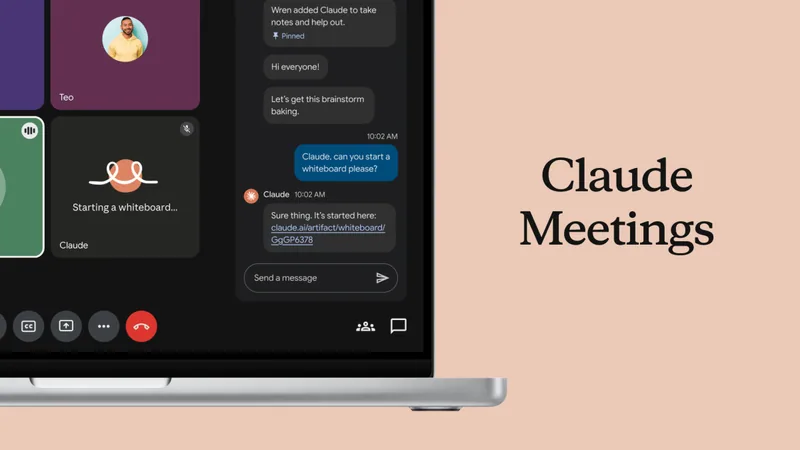
Anthropic announced new workplace features on Tuesday, including Claude Meetings, which brings Claude into video calls to begin working during the conversation rather than after it.
Per TechCrunch: as participants talk, Claude can draft the plan being discussed, map out a timeline on a whiteboard, answer questions in the meeting chat, and access connected work apps to retrieve information, such as last year's figures.
Reported by Aisha Malik, Nov 10, 2026, 9:30 AM PST.
Why it matters for an independent practice: For a practice's business side this is leverage you can deploy this week — marketing standups, staff huddles and vendor calls come out as a dated task list instead of someone's notebook. The stewardship question has to be answered first, though: an agent that both records the room and reaches into connected apps is a new data path, so keep it off any call where patient specifics are spoken and get the BAA question settled before it sits in a clinical meeting.
FDA hits two Chinese compounding-API suppliers with import alerts and warning letters for refusing record requests
BioSpace · November 11, 2026Pharmacy
The FDA sent warning letters to two Chinese active pharmaceutical ingredient providers: Chongqing Qiancan Technology and Tianjin Healthcare Medical Technology.
Neither firm provided the records the agency requested, and the FDA responded with import alerts as well as the warning letters.
Reported Nov 11, 2026 by Nick Paul Taylor; filed under Drug Delivery/Manufacturing.
Why it matters for an independent practice: Not an AI story, but directly actionable for any 503A/503B relationship: the refusal to produce records — not a product failure — is what triggered the import alert. Ask your compounder for its current API supplier list and check it against FDA import alerts now, because a sourcing surprise lands on the prescribing physician's patients and reputation, not the supplier's.