AI found a critical OpenJDK flaw in an hour for under $200 in tokens — Oracle's fix landed Nov 17
November 19, 2026 · 5 items
AI found a critical OpenJDK flaw in an hour for under $200 in tokens — Oracle's fix landed Nov 17
The Rundown AI · November 18, 2026Buildable AI
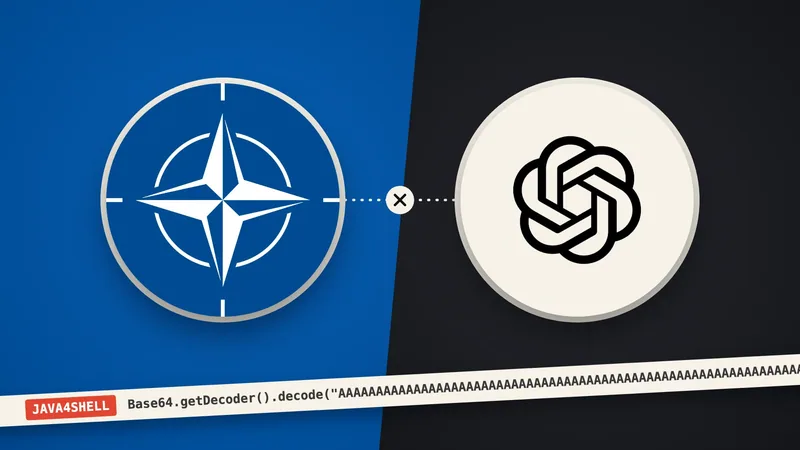
Startup Calif disclosed "Java4Shell" (CVE-2026-114938), a memory-handling flaw in OpenJDK's optimized Base64 decoder; Calif says it demonstrated remote code execution without a login against Keycloak, Jira, Confluence and Jenkins. Researcher Quang Luong found the flaw in an hour and had an initial exploit two hours later, spending under $200 on model tokens.
Oracle released a fix on Tuesday, November 17, rating the flaw 8.1 with high attack complexity. The vulnerable code path requires x86-64 processors with AVX-512 VBMI support; ARM64 systems are unaffected.
Same day, OpenAI said NATO's Communications and Information Agency is using its Daybreak security models — up to 300 billion raw input/output tokens monthly — and that ENISA used its models to find four software flaws, all four now fixed. OpenAI did not disclose models, pricing, or when the work began.
The Rundown's framing is that discovery is accelerating faster than deployment: Amazon's October security report logged a PHP2Shell exploitation attempt on October 17, four days before public disclosure, with example exploits appearing within hours of disclosure.
Why it matters for an independent practice: If any vendor in your stack runs Java — and plenty of practice management, imaging and portal middleware does — this week's work is a concrete ask to each vendor: which Java distribution and version, on what hardware, and when is the Oracle November patch applied? The broader lesson for an independent practice is that "a flaw was found fast" protects nobody until somebody tests and installs the fix.
Citibank rewrote its terms this week: use a third-party AI agent, and losses are yours — even from a hack
TechCrunch · November 18, 2026Buildable AI
Citibank — the third largest commercial bank in the U.S. — changed its terms of service this week to tell customers that if they use third-party AI tools for personal finance, anything that goes wrong is their problem, including getting hacked.
TechCrunch frames Citi as the latest major financial institution to put the brakes on personal-finance AI agents, not the first.
The agents in question range from frontier-lab models to purpose-built personal finance tools — i.e., the same general-purpose assistants staff already have open in another tab.
Why it matters for an independent practice: This is the liability template coming for every system a practice connects an agent to. Before you let an assistant log into a payer portal, a bank account, or a patient-facing scheduling system on a staff member's credentials, read the counterparty's terms — the trend is that the deploying party, not the platform, eats the loss. That is a question to settle with your biller and your bank this month, not after an incident.
Google added "temporary threads" to AI Mode — health searches that never enter history or recommendations
TechCrunch · November 18, 2026Patient acquisition
Google announced in a blog post that AI Mode now supports temporary threads: conversations that won't be resurfaced later in places like your search history or recommendations.
Google says users won't have to adjust their settings to take advantage of the feature.
Leading AI chatbots including Google's own Gemini already offered temporary chats; what was missing was the option inside Search itself, where users get dropped into the conversational AI Mode interface.
Why it matters for an independent practice: Symptom research is the single most private category of search, and this makes the highest-intent part of the patient journey invisible to personalization and to the behavioral trail marketers lean on. The practical MMR response is the one we keep landing on: stop optimizing for a remembered session and optimize for being the answer cited inside a single cold conversation — named physician authorship, clear service and location pages, and content an assistant can quote without prior context.
Mayo Clinic's next CEO is the radiologist who ran its AI program
Healthcare IT News · November 16, 2026Practice operations
Mayo's Board of Trustees announced this past Friday that Dr. Matthew R. Callstrom — most recently medical director for Mayo Clinic Strategy, previously interim chief strategy officer and chair of the Department of Radiology in Rochester — will succeed Dr. Gianrico Farrugia as president and CEO. Farrugia remains CEO through Dec. 31.
Callstrom has led the health system's AI efforts in recent years and has been vocal about deployment conditions: "Our aspiration for AI is to meaningfully improve patient outcomes by detecting disease early enough to intervene," he said when Mayo deployed new infrastructure for foundation models, image analysis and drug discovery.
Board chair Richard K. Davis cited "his ability to translate scientific discovery and emerging technology into meaningful advances for patients," and said Callstrom understands Mayo "as a physician caring for patients, a scientist translating discovery into clinical care and a leader shaping our strategy."
He joined Mayo more than two decades ago, has served on both the Board of Governors and Board of Trustees, and previously served as president of the Society of Interventional Oncology.
Why it matters for an independent practice: The signal for independent practices isn't Mayo's org chart — it's that the credential now being promoted is clinician-plus-AI-deployment, framed explicitly around patient outcomes rather than efficiency. That's the posture to adopt publicly: when you talk about AI in your practice, lead with what it detects or prevents for the patient, because that is the frame the most trusted institution in American medicine just elevated.
Medical Economics is running a free Practice Academy on collections, KPI stratification and ambient AI
Medical Economics · November 17, 2026Regenerative medicine
The virtual curriculum covers actionable tactics for collections, patient financial workflows and revenue cycle execution, paired with personal finance skills including investing discipline and career optionality.
One listed takeaway is that KPI averages conceal localized revenue cycle failure — stratifying days in A/R, denial rate and net collection rate by payer, provider, location and aging isolates the actual cash-flow bottleneck.
Another addresses front-office cost conversations as a driver of disengagement, with role clarity, scripts, leadership behaviors and patient financing options proposed as mitigations.
Ambient AI is on the agenda as an automation topic; the published summary cuts off mid-sentence, so treat the AI portion as advertised scope rather than a stated finding.
Why it matters for an independent practice: The KPI point is usable today without attending anything: run your days in A/R, denial rate and net collection rate sliced by payer, provider and location before you buy any AI revenue-cycle tool, because an averaged dashboard will hide the exact problem the tool is supposed to fix — and you'll have no baseline to prove it worked.