Nadella: "If you don't accept the agent, somebody else will" — ad-funded web economics get reshuffled
November 22, 2026 · 3 items
Nadella: "If you don't accept the agent, somebody else will" — ad-funded web economics get reshuffled
TechCrunch · November 18, 2026Buildable AI
Speaking at The New York Times DealBook Summit on Wednesday, the Microsoft CEO said "the current aggregators who have a business model which was for the human web will get, in some sense, reshuffled," comparing the shift to the move from portals like Yahoo to search engines like Google.
On monetization: "if you were monetizing ads because of the eyeballs, you now have to probably get down to essentially maybe CPC [cost-per-click] wins; maybe it's more transactional."
The live test case he pointed to: Amazon has blocked AI agents from browsing its catalog and buying on users' behalf. Nadella suggested a platform like Shopify that allows agents could gain the advantage — "if you're in love with a particular business model, you have to kind of scramble."
This is a prediction from an interested party, not data — but it's the clearest statement yet of the posture big platforms are taking toward agent traffic.
Why it matters for an independent practice: The practice version of "accept the agent" is concrete and cheap to act on: can an agent acting for a patient actually read your service pages, your provider bios and your hours, and complete a booking? If your site, scheduling widget or listings are unreadable or hostile to non-human visitors, the agent recommends whoever is readable — and for an independent clinic that referral goes to the hospital system down the road.
A free 8-step walkthrough turns a CSV of monthly numbers into an editable Claude dashboard plus a drafted data story
The Rundown AI · November 16, 2026Buildable AI
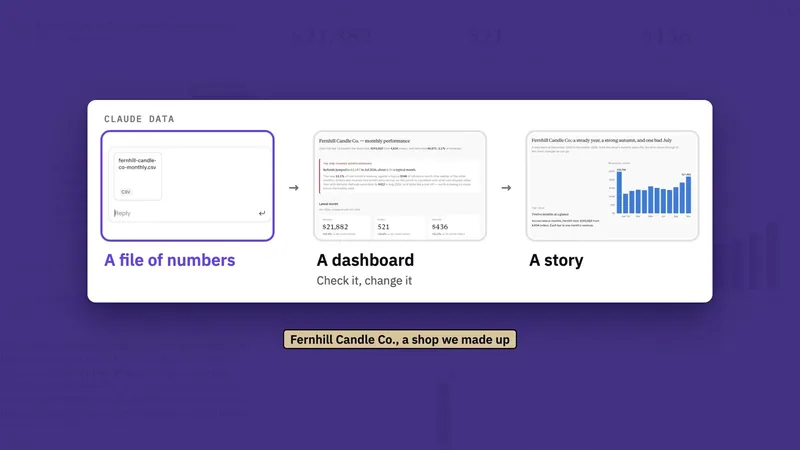
The guide (by The Rundown University, beginner level, 8 steps) runs: open Data from the Artifacts tab in claude.ai, import a CSV/Excel/JSON file, prompt for a dashboard, open any chart's underlying query, edit a title by hand, ask Claude to change a chart, roll the change back with version history, then have it draft a data story.
Step 8 is explicitly "Check the numbers before you share" — the walkthrough treats verification against the source file as part of the build, not an afterthought.
Access caveats are stated plainly: Claude Data is on paid plans only (Pro, Max, Ultra, Team, Enterprise); Enterprise turns it on by default on November 20, 2026 unless an owner already saved a setting; and "Import a file" works on screen but isn't in Anthropic's help page as of November 16, 2026 — Anthropic's November 10, 2026 announcement mentions only warehouses and connected apps, so the option may move.
Fallback if the Data tile isn't there: start a normal chat, attach the CSV with +, and ask for a dashboard.
Why it matters for an independent practice: This is the practice-ops build: export new-patient counts, referral sources, procedure mix and ad spend by month, and get an editable dashboard plus a plain-English narrative for the Monday meeting in an afternoon. Two things make it a system rather than a gimmick — the visible per-chart query and version history give you an audit trail, and the explicit check-the-numbers step is what keeps a hallucinated figure out of a partner report. Stewardship line: this is a file upload, so nothing patient-level goes in without de-identification and a clear answer on where the file lives.
A class of AI agents now lives in SMS — no app install, and they book appointments on a user's behalf
TechCrunch · November 21, 2026Buildable AI
TechCrunch's roundup catalogs agents you text like an ordinary person: they "remember context, connect to the apps and services you already use, and complete tasks on your behalf" — scheduling an appointment, organizing a calendar, researching a trip, sending an email, making a reservation, shopping, or reminding you days later.
The category has real money in it: Instinct, which TechCrunch calls one of the buzziest, raised a $1 billion Series C at a $10 billion valuation, per TechCrunch's September 28 report.
The list spans general-purpose personal assistants plus agents built for families, travel and work; the first entry profiled is Ask Proxy.
It's a catalog, not a test — TechCrunch is naming the notable options, not benchmarking which one actually completes a booking.
Why it matters for an independent practice: Patients already live in text messages, and this is the channel where an agent will try to schedule with you. Two actions: make sure your booking path can be completed by someone (or something) working over text rather than a portal login, and decide now what your own SMS automations disclose — a consumer agent texting on a patient's behalf sits outside any BAA you've signed, so anything you send back to it should be treated as unprotected.